Showing posts with label lama'y dayat (lamang-dagat/seafood). Show all posts

Sunday, April 16, 2017

Pancit En Su Tinta Choku

Bernie's

This pancit - stir-fried noodles - has been featured countless times in Philippine published media and television programs that I may not have anything more interesting to say about it.

For those who have come across this only now, this is pancit dyed and flavored with squid ink and soft slices of squid, then topped with fried garlic bits, crushed chicharon, spring onions, and sliced kamias as the souring agent instead of kalamansi. The name means stick noodles in squid ink, from the pidgin Spanish spoken in Cavite City by old-timers.

For those who have read about it and/or come across it on TV, I have news. Asiong's Carinderia, the Cavite City eatery which invented and first sold this dish, closed shop several years ago. A new carinderia, however, has opened its doors and serves almost the exact same menu as Asiong's, including pancit choku, which is referred to as pancit pusit in the menu board behind the display counter. The photo above is the pancit pusit at Bernie's Kitchenette, whose staff told me is owned by a chef friend of  Sonny Lua, Asiong's proprietor. The same staff also told me that Sonny now lives in Silang, Cavite, and has set up a new Asiong's Carinderia there, but that the cook/s at Bernie's are the same as the one/s who used to cook for Asiong's. 

The pancit pusit tasted the same as pancit choku, only that instead of kamias the souring agent used is shredded green mangoes. The carinderia had run out of green mangoes when we ordered, so we were given kalamansi, which I supplemented with the very nice spiced vinegar that's also being sold at the store.

The pancit came to mind because as the kids and I were on our annual  Bisita Iglesia, an officemate called  to ask where she could find the black pancit. I was struck by the term as it was then Black Saturday, more so that we had decided to wear black shirts this year on our pilgrimage. After our survey of six churches in the highlands of Cavite, we decided to push the color motif further and went to Bernie's, to eat black pancit. We deemed it appropriate Lent fare, without meat (we chose to ignore the chicharon which wasn't meat, per se), particularly now that my eldest child is of eligible age for fasting and abstinence. 

Photo of Asiong's pancit choku, with chili garlic in oil, taken five years ago.


Related Post:
Home-Cooked Pancit Negra

Saturday, April 15, 2017

Labahita Bacalao a la Ciudad de Cavite

This is the first time we spent Lent in Cavite that I dropped by the public market during Holy Week. And so it was my first time, after living here for exactly ten years, to see the tumpok of fleshy daing na labahita (salted, sun-dried surgeon fish or unicorn fish) fronting almost every other stall, perfuming the blistery air with their briny scent.

I have an aversion to any fleshy salted dried fish, borne by my having grown up in Pangasinan, a coastal province crisscrossed by rivers, so that there was fresh seafood every day. The only dried salted fish we ate was what we called tuyo, named tunsoy elsewhere in the Philippines, which is a kind of herring that is properly so salty it needs mounds of rice to eat with, but is emaciatedly flat that the flesh is paper thin.

Come to think of it, a visit to the dried seafood stores in Pangasinan would yield mostly emaciated daing - mainly espada (called pingka locally), pusit, dilis. Even tilapia and bangus, and basasong (kalaso), are butterflied before being marinated and sun-dried.

My father once came home with a crate brimming with thickly fleshy dried salted fish after spending a month in Palawan during the early eighties. My mother didn't know what to do with it - she tried frying some, but they were so salty we were gagging on our first bite. I don't know what happened to that crate, it was given away most probably, but possibly thrown away.

Now I know those fish would have been good in ginataan - but in Pangasinan we didn't cook savory dishes with gata, because it is associated with sweet kakanin; or used to flavor vegetable stew - but we have our beloved bagoong for that; or maybe just soaked in water and cooked like any other fish - but we have enough saltiness in our Pangasinense lives.

And so dried, salted labahita did not excite me. Especially since I find the fresh fish somewhat malansa. I just found it curious that there were a lot of them being sold, when I rarely come across the fish, fresh, in my weekend market forays. Of course I made the connection right away, concluding it is a Lent thing in Cavite, and mentioned it to my suki vegetable vendor, who also had labahita among the bilaos of tomatoes and mustard greens and kangkong.

The suki confirmed that labahita is traditional Lent fare in Cavite City, and is cooked bacalao style. Sonny Lua of the legendary but now defunct* eating institution Asiong's Carinderia once mentioned to me and a friend that he makes a mean bacalao. He had left before we could sample it, but now I realize he must be talking about this bacalao, not made with (imported) cod, but with the abundant local labahita.

The suki offered  the daing, and I thought why not. The prospect of cooking bacalao had me, daing aversion or not. And as can be gleaned from the many posts in this blog, I am never one to back out from trying out the local tradition. So  I asked the suki how Cavite cooks its bacalao. I was told just like menudo, with diced potatoes, carrots, garbanzos (chickpeas), bell peppers and cabbage. I asked if it is with tomatoes, just like the original version, and even the menudo, but I was surprised to learn that Cavitenos don't like the taste of tomatoes in bacalao, so no tomatoes or tomato sauce is added.

I said that it is summer, and tomatoes are dirt cheap, and are good with fresh fish. Besides they would do well to counteract the saltiness of the daing. But no, I was admonished, the daing is soaked in water to remove the saltiness, so there is no need to mix in tomatoes. Alright, alright, so I bought a kilo (at P90 per half a kilo), planning to cook half of it without tomatoes, and the other half with tomatoes.

Once I was done with my purchases, the suki took me to the back of the stall to show me a big plastic bag full of bacalao, for lunch and dinner that day, and offered a taste so that I would know how it is like. I had stopped carrying a camera to the market because I have hundreds of food photos I haven't been able to use, but there are many days I deeply regret not being able to record something so compelling. This was one of those days.

I quickly got over the regret, though, and planned to recreate the dish, instead. It was appetizingly yellow, with the addition of atsuete (strained annatto seeds). I was thinking maybe the original dish from which this was based had saffron, of which I had some in my pantry cabinet from a trip to the UAE - I didn't doubt for a second that the Cavite bacalao had Spanish roots, because I've been hearing the fishmongers talk to their customers in pidgin Spanish for years now that it doesn't jolt me anymore - but does not fit into the Lent scheme of things for being so expensive and all. And besides, the lemony hue made me crave for yellow curry, of which I have lots in stock, too.

And it seems I don't know how menudo is cooked Cavite style, because the menudo I know has all ingredients, including the pork and liver, diced, with tomato sauce. The bacalao I ate at the market looked like tuna flakes stir-fried in vegetables, like how it is sometimes served for breakfast at the office canteen. Comfort food during rainy days. On the way home I thought this doesn't augur well for Lenten fasting, what with the salty fish and all needing rice. Lots of it.


I've bought daing in other places, and I've been told an hour's soaking is enough.  My suki at the Cavite market instructed that the labahita be soaked for 1 1/2 hours. I went for two, but while I was stripping and shredding the flesh my son tried a bite, and said it was very salty. I already said I had an aversion to salty fish, hadn't I? I promptly put the shredded fish in a pan full of water and brought it to a brisk boil for several minutes, straining the water afterwards. I stir-fried the lot with a full head of garlic and lots of sliced onions, some biryani and turmeric powder for color, and added the diced vegetables, cooking everything in two cups of water until soft.

I'm afraid I overdid the shredding, or maybe it was too much boiling, which resulted to the fish becoming too mushy. The kids think it's still a bit salty, but I already found comfort in it, even in the midst of all the sultry heat. I'm sure it would be good for Black Saturday, too, reheated, or maybe mixed in scrambled eggs, to go with pan de sal and tsokolate for breakfast. I know, I know - it is luxurious, and does not define Lent eating, at all, but at least I haven't said anything about rice, which still passes for not having a full meal. Oh well, my index fingers and thumbs on both hands ache painfully from all the shredding, not to mention the smell that won't go away. I think it's penance enough.


*As reported by the staff at Bernie's Kitchenette, which serves the same fare as Asiong's, Sonny Lua has transferred to Silang, Cavite, and has set up Asiong's in that town. I haven't verified it, though.

**After a cursory search in the internet I found that the Philippine Daily Inquirer published some years ago a bacalao recipe with tomatoes, also for Lent.


Related Posts:
Cups of Comfort
Ampalaya and Crabmeat
Monggo
Papait
Unda-Unday
Bihod
Larak tan Ganuza

Saturday, January 21, 2017

Advent Crabs


There are blue crabs, and there are red crabs. Even purple crabs. But I have never heard of, nor read about, any violet-legged crabs, let alone see one. 

Until that fateful weekend not too long ago at the Cavite City public market. I was late, as usual - it was already nearing noontime, and there were not that many vendors at the fish and seafood section. Needless to say, there weren't a lot of choices, and not even a tumpok of the ever-present blue crabs.
So this heap caught my eye. Their color was attractive....but not in a crabby sort of way. Violet crabs? I associate that color with sweetness, as in purple yam sweetness - ube. But seafood? Nah.

It was expensive, at Php180 for the entire lot. More expensive than the Cavite City blue crabs

But on second thought, they were not - considering the novelty. And because of the cold weather that has uncharacteristically enveloped the holiday season, there had not been a lot of seafood  choices lately. So, on the basis of supply and demand, these were cheap.

But I was on a budget. And, how sure was I that these were edible? Would they taste great? And they weren't moving anymore, so they might not be that fresh. And on, and on, and on. 

But now, no matter how early I go to the market, or how late, I cannot find any violet-legged crabs. No sign of blue crabs, either. 

So I let an opportunity pass me by. Now I will never know how violet-legged crabs taste like. No matter if they taste bland, or bitter, or they might be diarrhea-inducing. I will never know. 

So this is my new year's resolution. I will not skip something, for I might  regret it later. And reviving this blog is part of it, because I have gone around the country twice, some even thrice, over, and have explored several foreign countries in-between, but I have kept all the memories of these trips to myself. Some I have even forgotten about. 

I don't even know if blogging is still relevant these days. But no matter.

So, violet-legged crabs, watch out.

Friday, March 28, 2014

Hong Kong: Sheung Wan Dried Seafood Market


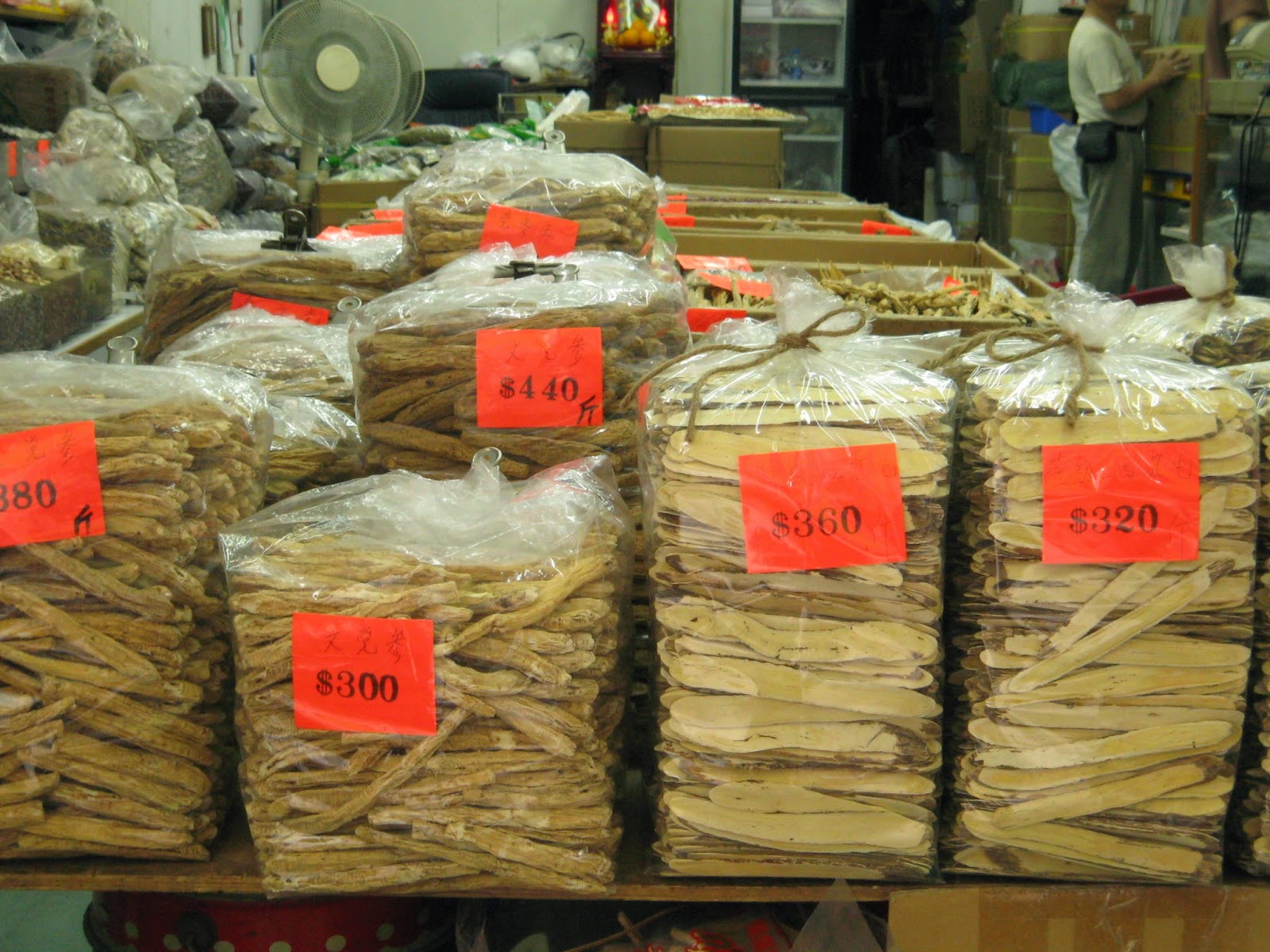
When I was booking my hotel for my four-day stay in Hong Kong, a major part of the reason I decided on one in Sheung Wan, apart from its price, was its being located amidst the famous dried seafood market in the island.  
The reviews weren't that great, from a non-Asian point of view. The main drawbacks, according to the reviews, were that the subway doesn't service the area, and the off-putting "smell" of the market.  
That trains do not reach Sheung Wan didn't bother me, as I am used to walking. And further research revealed buses and trams actually serviced the area. My hotel's website also indicated there was a free service shuttle to Hong Kong Central, where my training venue was located. 
As for the "smell," it was a minor inconvenience. I was actually jumpingly excited knowing that I will be living just beside a large - as in blocks and blocks of it! -Chinese market for four days!

And so here is a peep into it. I was a bit frustrated, because in the mornings when I left for my training the stalls were still closed, and when I arrived back in the area in the evenings they were already shuttered. So on my last day in Hong Kong, instead of visiting Kowloon, or even Macau - the ferry terminal was just across the road from my hotel - I indulged myself in a long and winding market stroll.
To say I was shocked is an understatement. I had got this picture in my head of an indoor market in a large hall, much like the public markets in the Philippines. But in Sheung Wan everything was street-side, with row upon row of market stalls along three perpendicular avenues for blocks and blocks. 

I was also imagining the din of vendors, calling to shoppers to come look at their wares, and a heap of products to dig into. But no, all things for sale were neatly and systematically arranged, inside clean stalls that didn't emit any strong smell, and the din came from only the trams and buses that passed to and fro in the adjacent streets.  
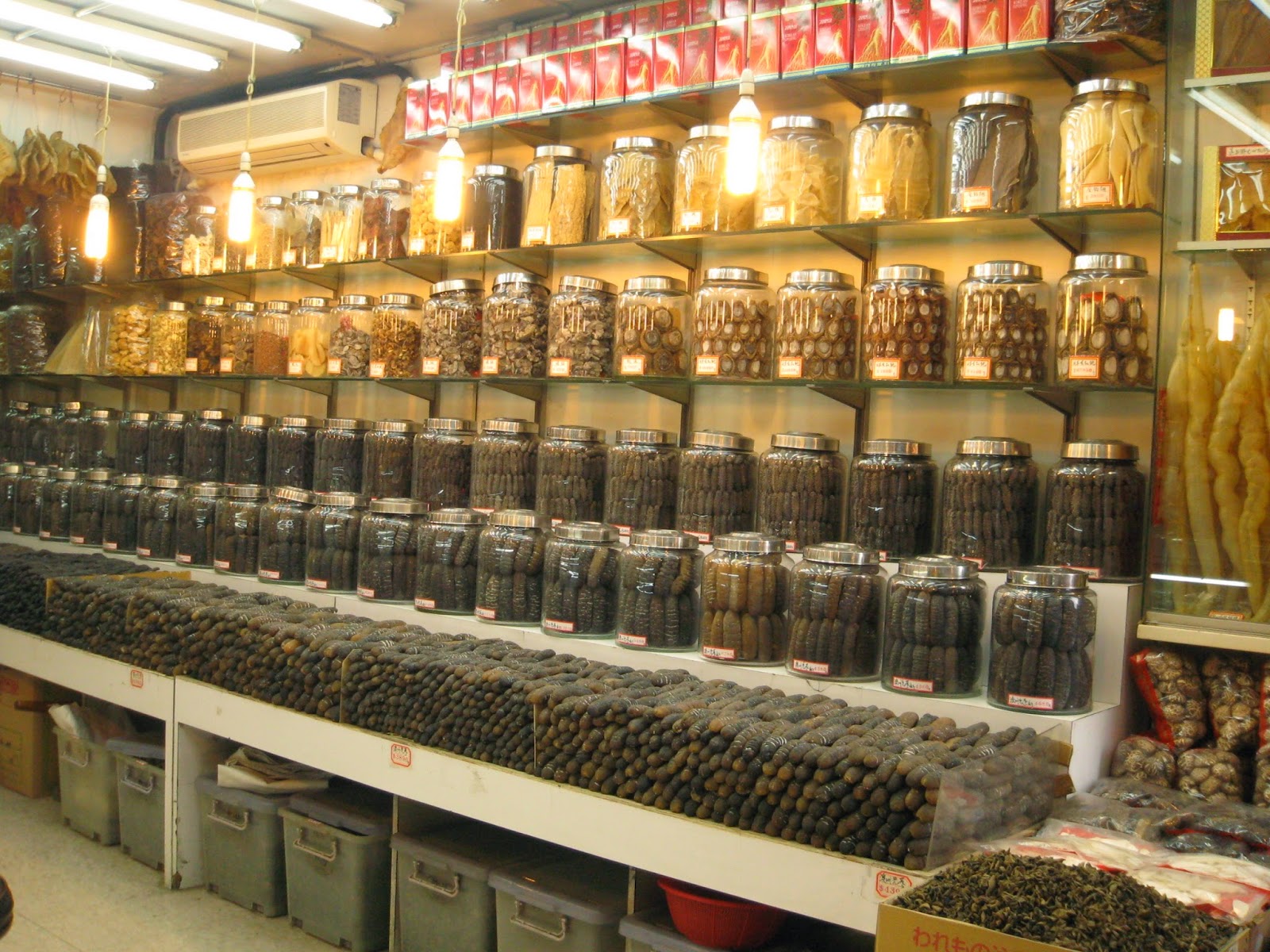
What made a lasting impression to me was the variety of sea cucumbers on sale. There were stalls solely dedicated to this Chinese delicacy, selling them in all kinds of color, size, texture. I didn't know how to distinguish one from the other, of course, so I just contented myself in soaking the sights.

Maybe like blue cheese, the moldy ones probably cost more? Or are even preferred more?
Cracklings by the sack just delivered.

I don't even know what these are for. They look like the shell I used to feed to my parakeet. 
My favorite area was the collection of stalls by a side alley selling all kinds of dried shell flesh. It was a bright place, heightened by the orangey hue of the merchandise. 
Dried scallops in varying sizes and shapes, and from different locations across the globe, made my heart skip beats. 
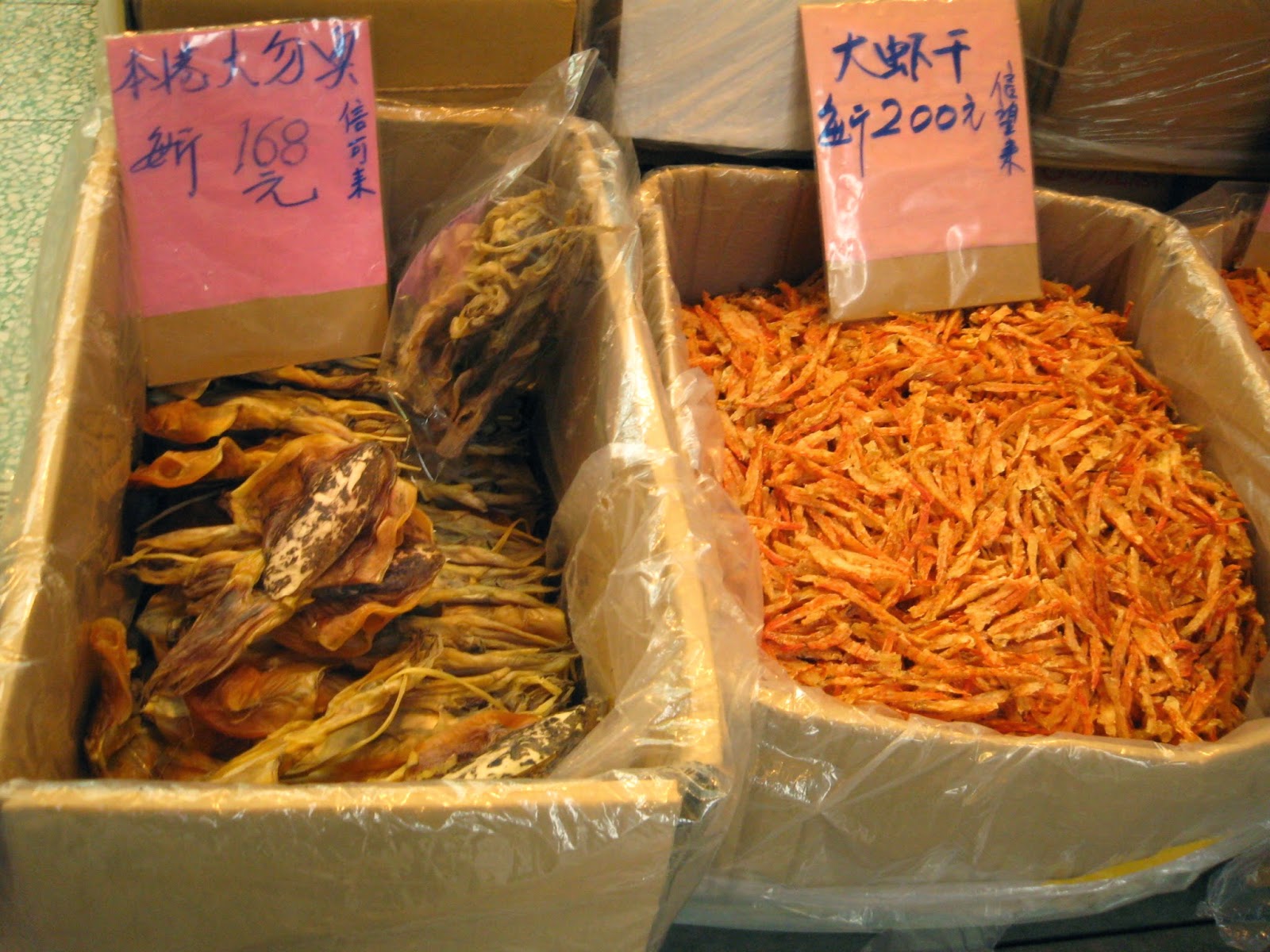
Shrimps and prawns, too, plus dried squid and octopus from miniature to giant. Fried dried squid is one of my favorite things to eat for breakfast, and I pine for the smell of grilling dried squid in the afternoons. Which is why I never thought of living outside of Asia - I cannot forsake the smell of dried squid. 
Dried jelly fish. I have never tasted one, but much as I wanted to, I didn't venture to buy. To my regret. Next time.  
More dried jellyfish, in the foreground. In the background are dried dulong, which came as a surprise. I love to eat crisp-fried daing na dulong, too, for breakfast.
Wee oysters, medium oysters, large oysters
It was truly a learning experience, going around this market. I never saw dried oysters before. In Pangasinan, as well as Cavite, we have heaps and heaps of oysters in varying sizes, but they are all sold, and eaten, fresh. Sometimes they're not even cooked at all. 
This one takes the prize for being the largest and plumpest oysters
I've seen dried seahorses in the Chinese pharmacies in Binondo (Manila Chinatown), so this was old news.  
But this one was new. I thought for a while they were scouring mats. I'd love to know how these black seaweed are eaten. 
Octopus tentacles
Fins of what fish I don't know, though I'm certain they're not from sharks
Are starfish even eaten?
The tuyo - Pinoy slang for dried salted fish - area

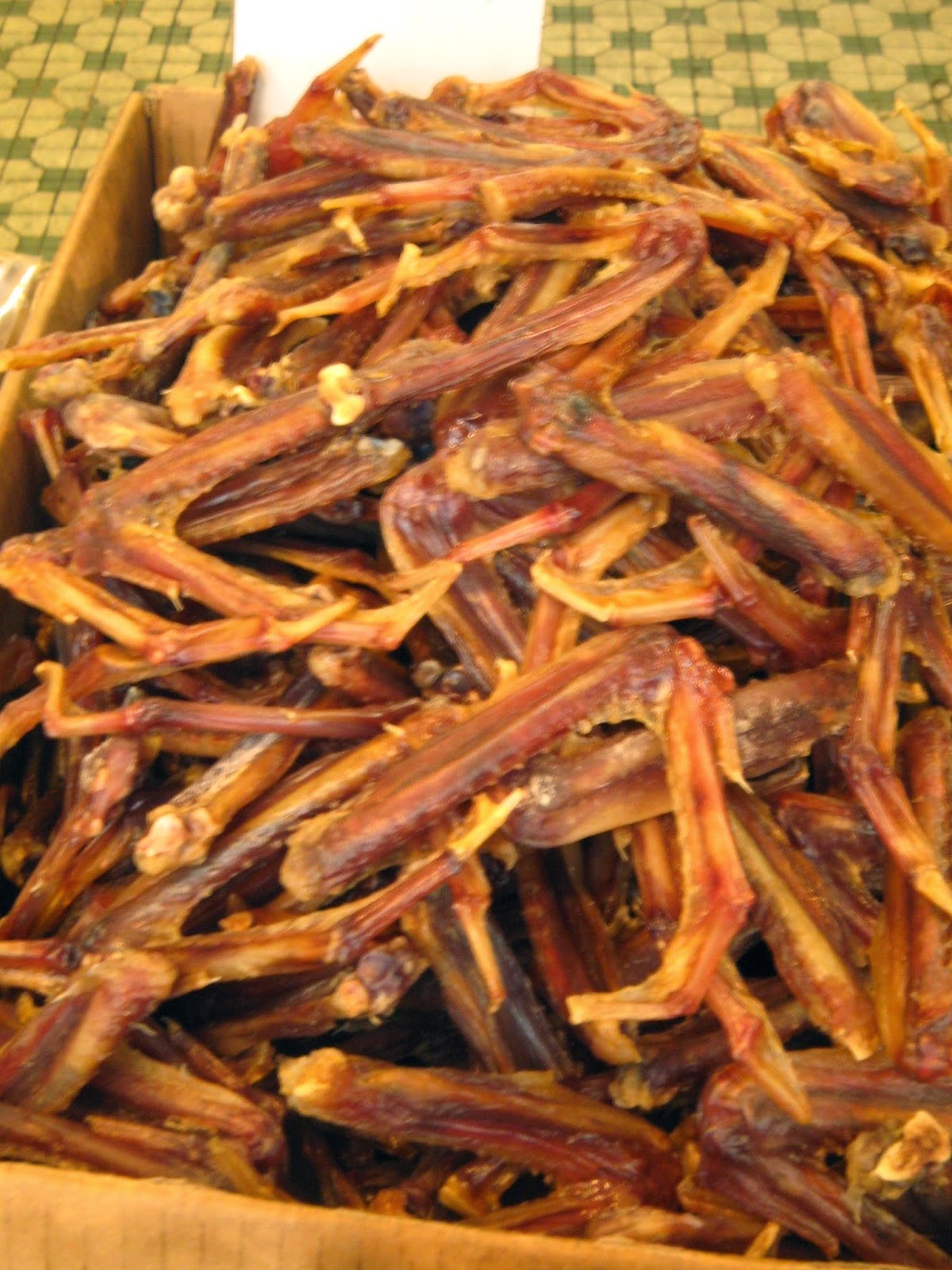
All is not seafood. There were strings of Chinese sausages and dried chicken drumsticks. 

Chicken intestines, too
And gizzards
By the length of these wings, I'm guessing they're not white-leghorn. Probably not even chicken at all.
Dried noodles for the dried meats
And various kinds of teas
Dried chrysanthemum flowers. There was this coffee shop in Binondo which used to serve pots of chrysanthemum tea. I brought my friends there, and we all found the tea bitter, and it made our heads ache, but we always ordered a pot whenever we were in the area, just for kicks. Sadly the cafe doesn't serve it anymore.  

After my market stroll I got to eat this steamed atop the chicken dim sum at Lin Heung Kui.
There was one stall selling all manners of fermented vegetables.
And pickled things from the sea. 

Nuts, beans and legumes being dried under the sun along a side alley


Shopping for pasalubong

It is always an enriching experience strolling around markets. This one was so stimulating, visually and cerebrally. It was one morning well-spent, and is a highly recommended prelude to lunch at Lin Heung Kui. 

Related Posts