Showing posts with label nainom (inumin/drinks). Show all posts

Saturday, April 12, 2014

Hong Kong: Tsui Wah

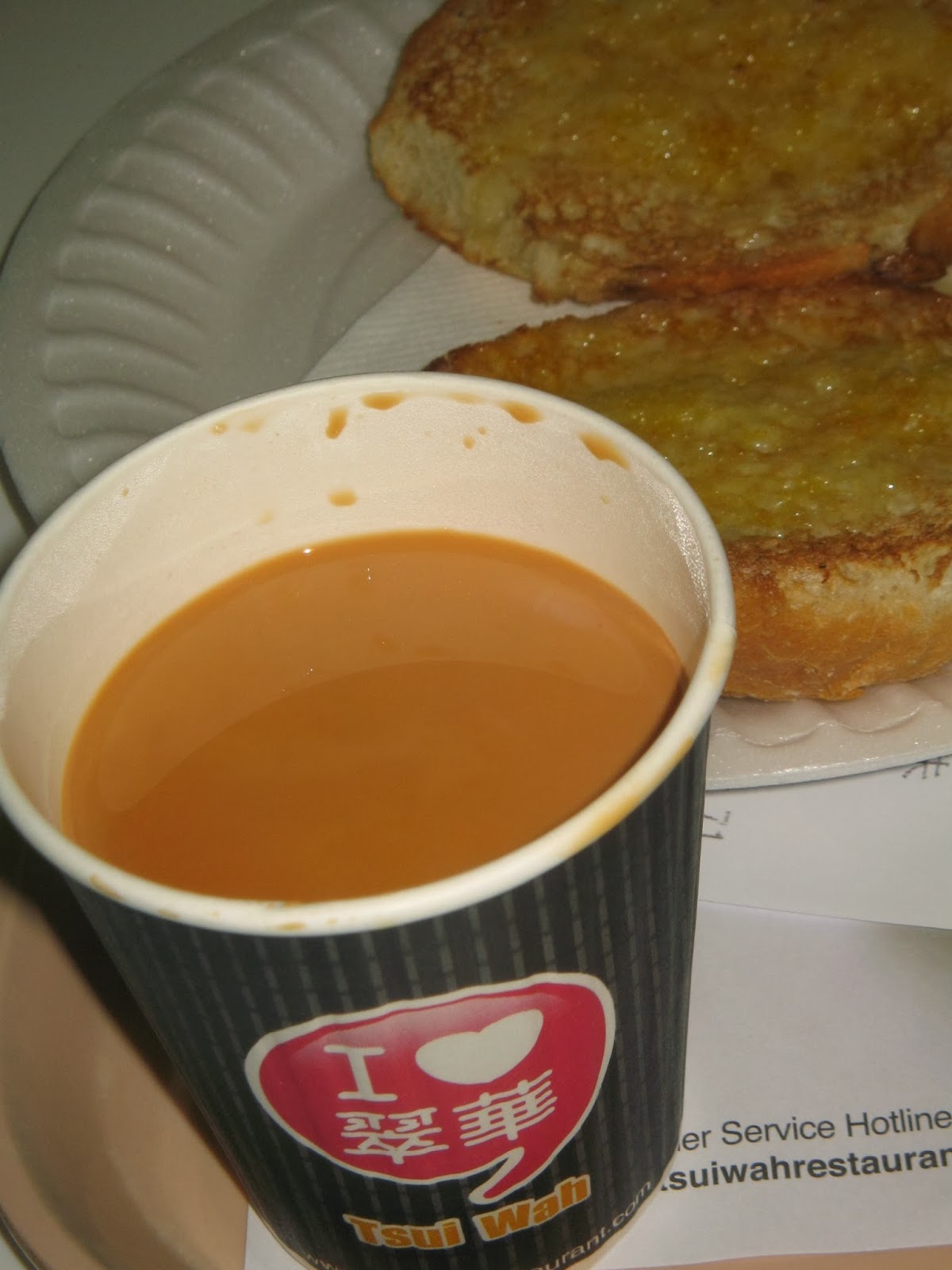
A hot cup of nai cha or milk tea and a couple pieces of sweet buttered toast from Tsui Wah, plus a bowl of fish noodle soup,  were the last things I had upon leaving Hong Kong.

Tsui Wah’s buttered toast was one of the things that made an impression on Anthony Bourdain during the Hong Kong episode of The Layover. I found the shop by the busy Des Voeux Road Central, on the other side of Connaught Road Central along which it is parallel, a large tea house all in glass walls and windows. But this must not have been the original stall that Anthony Bourdain visited, for that was just a tiny, hole-in-the-wall affair.


Anyway, trying this and that and looking for other things besides, the chance to try Tsui Wah slipped me by. But still, luck was on my side, because Tsui Wah was at the departure area of the Hong Kong airport. So I arrived early for my flight, and sat down to savor my last hour in Hong Kong with one of the city’s famous offerings. 

The nai cha was how it should be, hot, creamy and not too sweet, the full-bodied tea providing a jolt to the senses. Which reminds me – in all of the four days I traveled along the expanses of Queen’s Road Central to West, Connaught Road Central to West, and Des Vouex Road, and exploring the malls all around Central,  there was only one cold bubble milk tea shop I passed by, and that was a Gong Cha stall. 

Hot milk tea – without the bubbles – can be ordered almost anywhere, though, especially in those tiny, family-run noodle shops. And of course there were all the teahouses serving complementary hot tea to your heart’s content, but without the milk. 
But as for Tsui Wah’s buttered toast, which came slathered with condensed milk, I wasn’t too impressed. In fact upon the first bite I wondered what all the fuss was about. It was just an ordinary bun made chewy by the butter and condensed milk heating up to a slightly crackly thin layer after its stint in the oven. 

It can be easily replicated at home, using better bread and taken to a myriad of directions. With cheese? Cream cheese! Or strawberry jam. Cream cheese and strawberry jam! Or mango jam! Even just simply butter – good, salted butter – and a generous sprinkling of white sugar, grilled until the sugar crystals have almost caramelized.
My bowl of rice noodles and fish balls was bland, as expected. All three were incidentally among Tsui Wah's top ten dishes. Tsui Wah’s milk tea is sold in take-home plastic bottles, so I bought several to compensate for the tetra packs of tea and cans of creams soda in my backpack that immigration officials confiscated because I forgot to insert them into my check-in luggage. The bottles were some of the things I brought home, along with several orders of baked buns from Tim Ho Wan, and a heaping of memories of food newly discovered and rediscovered.
But before I leave Hong Kong entirely, let me include a few other photos taken at the expansive Chek Lap Kok airport. 
  The female CR must be one of the most mother- and child-friendly lavatories in the world.

No, this is not a mirror image. And with that to muse over, I boarded my plane. 


Tsui Wah Restaurant
Website


Related Posts

Friday, April 11, 2014

Hong Kong: Cliftons

The seminar I attended in Hong Kong was held at a Cliftons training venue  right smack in the middle of Queen's Road Central. The venue provider also catered the three-day event, providing breakfast, lunch, and mid-morning and mid-afternoon snacks. 

Before the seminar I wasn't at all happy that I will be provided most of my meals for the day. I envisioned lackluster Western dishes designed to please varying palates - in short, safe and oft-repeated standards. 

And that is what met me on my first day. Breakfast was sausages, eggs and some breads. I had indulged breakfast at my hotel, so I congratulated myself. I wasn't in Hong Kong to eat sausages. 

Lunch, however, was a revelation. There was a total turn-around, and it became hardcore Chinese. There were dishes that even came across as exotic, ones  I could never have come across no matter how hard I scoured the restaurant scene across Hong Kong. I would never have ordered them, for one, if they were available, since they were remotely unfamiliar. But here it came free with the tuition that the agency I work for had paid.  

And there was confirmation of the food's pedigree - my favorite classmate, the one who pointed me to Tim Ho Wan and who explained how to eat congee and soy milk for breakfast, declared that everything was "surprisingly good."

I didn't find everything that palatable, though. That dish above, for example, was labeled steamed angelo lufta and glass noodle in garlic. I'm sure there was some sort of mistranslation or misspelling there, for no matter how I researched I could not find what lufta or angelo are anywhere. But it's some kind of gourd, very much like sponge gourd or patola (which is spelled luffa), but not as slick, and very, very bitter. It has a different bitterness from, say, ampalaya, or even papait. The large slices further emphasized the bitterness, so needless to say I didn't enjoy it very much. 
This one is more familiar, called braised lo hon vegetables with bean curd. "Lo hon" is this revered vegetable mix called "Buddhist delight" because it is eaten by Buddhists, and is traditionally served in Chinese households for the first five days of the lunar or Chinese new year for self-purification practices. At Cliftons the vegetarian dish was mixed with glass noodles. 
Another vegetarian noodle dish, egg noodles with mushrooms. 
Smoked duck breast and peppered pastrami beef, which were very good eaten together with the vegetarian noodles. A bit irreverent, yes. I would have preferred those heavenly slices of duck with noodles in soup, though. 
I always enjoy the variations of Chinese rice, fried or otherwise. I had plenty to enjoy at Cliftons, like steamed rice topped with chicken a la king, or stir-fried yang chow style. 

No, liquid is not waste. Or is that, waste is not liquid? Or no liquid waste should be thrown here? This was a notice posted by the water dispenser. 
The cream soda is a popular carbonated drink in Hong Kong, said to taste like a mixture of milk and 7-Up. It tasted like shandy to me, and a can was a good way of helping me digest all that I ate as I got ready to end the day and start exploring Hong Kong, fueled and ready eat more.


Related Posts

Thursday, April 10, 2014

Hong Kong: Hotel Breakfast

Because there were a lot of interesting things to eat around the area where my hotel was located, I had been tempted to forego the free breakfast included in my hotel package. But I inspected the spread on my first morning, and found it equally interesting so I had breakfast there. And I got hooked that I ate breakfast there for all the days of my stay in Hong Kong. 

It had the usual hotel breakfast features, but it had distinct Chinese accents. I always started with a plate of fresh fruits - there was  my favorite Hami melon, and bananas probably from Davao down south in my home country, sweet pineapples, and braised plums redolent of masala. 
Then there was congee, the bland Chinese rice porridge that was a perfect canvass for the contrasting textures and flavors of the various toppings on offer - fried salted peanuts, pickled vegetables, meat floss, fried wonton wrappers. The excellent chili paste did wonders in spicing things several levels up.   

The congee metal container sat on a warmer side by side with another container filled with warm and sweet soy milk. All around them were bowls and saucers, but no single mug or cup was visible. This perplexed me, for naturally I wanted to drink the soy milk from a cup. 
So I again consulted my Chinese classmate, who gave me the heads up on Tim Ho Wan, and it was explained to me that yes, soy milk was drunk from a bowl. But here's another interesting thing - he further explained that congee and soy milk were usually eaten together for breakfast.  

So from then on I had congee and soy milk together, and yes, I had them both from bowls. 
There was always pancit, or stir-fried noodles, in one form or another. I  noticed mainly Chinese males eating them. I am a noodle-lover, always was, but the noodles didn't appeal to me much - mainly because I was so used to the Philippine version that feature a heap of various toppings from meats to balls to vegetables and even deli meats, that I thought I didn't know how to eat this kind of noodles. For it was just stir-fried noodles, and not much else. 
Not wanting to miss an opportunity to learn, I ate the pancit, of course. I tried all there was to try, every single morning. There was bihon - thin stick noodles - one day, and there was a thicker glass noodles another day. They came slick with sesame oil and soy sauce, but every single day they came unadorned. 

There was always dim sum - which couldn't compare with the ones I had at Tim Ho Wan or Lin Heung Kui - so I mixed them in with the noodles. Sometimes I got fried chicken or fish fillet or deli meats to mix in, too. Maybe this was how noodles was made to be, to be a side for viands, while pancit  in the Philippines evolved to become a one-pot dish. 


Related Posts
Eating Around Sheung Wan
Strolling Around Sheung Wan
Sheung Wan Dried Seafood Market 
Lin Heung Kui
Yung Kee
Tim Ho Wan
Cliftons Event Catering


Tuesday, March 18, 2014

Hong Kong: Lin Heung Kui

Tourist and foodie brochures in Hong Kong recommend Ling Heung for traditional yum cha dining. Lin Heung not only serves authentic dim sum and Cantonese fare, it also offers the real yum cha experience – roving dim sum carts, loose leaf teas, huge kettles that must contain at least a gallon of hot water, ceiling fans, liveried old gentlemen who are at least seventy years old as wait staff.

The original Lin Heung tea house in Wellington Street is one of the oldest Hong Kong-style restaurants in the city, having been established in 1926. It is said, however, that the waiting lines there are legendary.

It was getting late, and I had eschewed Yung Kee for the lines. Naturally I didn’t want to face another wait. So I went to the relatively newer outlet, Lin Heung Kui, in Sheung Wan, which was conveniently located near my hotel.

Like what happened during my first visit to Tim Ho Wan, I almost missed Lin Heung Kui. There was no signboard, or maybe there was, but it was in indecipherable Chinese characters. I was tracing the street number, but where it should have been was a very narrow stall with a traditional Chinese pastry shop inside.
Good thing I went in and asked, for I was pointed to the elevator. It slipped my mind that Lin Heung Kui occupied the 2nd and 3rd floors! So I took the narrow, noisy and run-down-looking elevator, and once it bumped to a stop and opened, there was before me a long hall full of noisy diners from my mother’s generation. What looked liked entire clans crowded around tables eating whole ducks, which turned out to be one of Lin Heung’s specialties (8 Treasure).

I felt like a kid, but the liveried elderly gentlemen by the elevator gestured me to come in and directed me to an empty table. They promptly left me, but soon I was approached by an English-speaking master who handed me the menu. I said I wanted dim sum, but I was told that dim sum was served only until 4PM, in true yum cha fashion. I felt aghast, remembering all the nightly dim sum I had eaten at Tim Ho Wan.

It was my last night in Hong Kong, but I thanked the foodie gods that for my return flight to Manila the following day I had booked one in the evening. So I resolved to come back for yum cha the next day, but since I’ve been twice thwarted for dinner already that night I decided to sit it out and have dinner at Lin Heung Kui.
It was a difficult decision, for like most Chinese restaurants, dishes at Lin Heung Kui were meant for sharing. After several minutes of discussion with the English-speaking waiter I settled on the stir-fried beef with celery, water chestnuts and crullers, whose photo was plastered on a window and whose size looked manageable.

But the dish was a terrific decision. It boasted contrasting textures, with the soft, flavorful beef slices, crunchy celery, dense chestnuts, and the chewy crullers. I finished the entire serving, and my appetite was whetted for my yum cha. 

The next day I made sure to walk around the blocks and blocks of dried seafood market that defines Sheung Wan, so I could work up an appetite. At noontime I proceeded to the now familiar elevator, squeezing in with some lolos (grandfathers/elderly gentlemen) toting several pieces of what looked like shopping bags.

When the elevator opened the noise was several decibels higher than the night before, and the hall was bursting to the seams with diners and several dim sum carts snaking around the tables. The ambience was short of frenetic, but soon staff hustled all of us to a table just by the cashier with only just one diner, and I was thankful that I got to sit down rather quickly. 
The first thing to land on the table were tea cups, followed by the ritual pouring of freshly brewed tea. I was busy absorbing the atmosphere, and trying to locate the dim sum carts, which were invisible at the moment, that I failed to see that the tea cups on the table weren’t alike.  I only became aware after I noticed that waiters kept coming back to our table, pouring what I took to be tea from the huge kettles on the cups of my elderly dining companions.

I got curious, because I was just still blowing on my own tea cup, while the lolos beside me had already had several pours on theirs. When  I paid attention the first thing I observed was that I only had one wee tea cup, while the lolos each had several big ceramic ones.
Turns out there was a ceremony to it all. Loose tea leaves were spooned to a cup with a lid, then a waiter came to pour hot water on the leaves.  The elderly diner proceeded to agitate the leaves in hot water with chopsticks, stirring them around. Then the cup was covered, and the liquid was emptied to another cup that was  a bit bowl-like in size. The waiter came back with the kettle, and again poured hot water on the tea leaves.

The diner again covered the cup. After about three minutes he poured the tea on another cup, smaller this time yet still bigger than my own tea cup. After a minute he started sipping the freshly brewed tea. The waiter regularly came back to our table to replenish the hot water, replacing the leaves after several brews.

I remember reading somewhere that the first pour of the hot water was for cleansing the tea leaves. One of the diners at our table even had his tea leaves “washed” several times.
foreground: the bowl containing the tea "bathwater"

I remember reading somewhere that the first pour of the hot water was for cleansing the tea leaves. One of the diners at our table even had his tea leaves “washed” several times.

It was fascinating to watch, and I thought I should have felt offended for having been denied that ritual. But instead I felt privileged to have witnessed it. Although my father’s family was of Chinese descent I could never have been mistaken for a Chinese, having taken my looks from my mother’s side. And my father’s Chinese roots were so far removed that they don’t even acknowledge it, much more practice anything Chinese. 
So I was poured tea already brewed at Lin Heung Kui, not the tea leaves for my own brewing, in a small cup. But on to the food. Roving carts pushed by female staff had, by this time, reached our table. All I could manage to do was point to which steamer baskets I wanted, which was a simple enough task, but, because of the language barrier, it proved to be daunting. I couldn’t even identify any of the steamed dim sum, and nobody could tell me what they were. I couldn’t delay the carts for my perusal, as many other tables were waiting for them. 
So what I did was to get those that didn’t look familiar. There were many, but I couldn’t try them all, for there was only one mouth to stuff it all in. There were other carts, too, for the fried dim sum, and for dessert, which was Malayan cake – similar to Binan puto – in a huge bamboo steamer basket. 
The baked dim sum were quite exceptional, but I didn't bother to sample the fried ones, which all looked like fortune cookies.
This was a personal favorite. I don't know its name, of course, but it had steamed chicken, mushrooms and fish maw, wrapped by a very thin slice of a rootcrop (huai shan) - that was like a very chewy gabi - then topped with a portion of dried seaweed which I saw by the sackful hours before at the dried seafood stalls. I have read that this is a very unique dim sum rarely served in other Chinese teahouses.
Instead of plates we had small bowls, chopsticks, and soup spoons, which all made eating dim sum easier and less fussy.
This sesame-covered pastry had an excellent flaky, flaky crumb, peppering my chin with paper-thin flakes at every bite, thin enough to let the caramel-sweet char siu filling to shine through. 
The lolos eating beside me got a plate of lotus-paste buns from a dessert cart, and pushed the plate towards me. For a photo, they gestured. When I had taken enough shots they gave me one bun, and said it was very good.
It was very good indeed. And I felt honored, as the Chinese consider lotus as a symbol of  long life, humility, honor and tranquility. My entire adventure at Lin Heung seemed blessed by the gods.

When we had slowed down a bit the lolos turned their attention to me, and asked, Filipina? 

I smiled and said yes, and asked if they were from nearby. They said, in halting English, that they were from Kowloon, and that they had come to Hong Kong island to shop at the Sheung Wan dried seafood market, showing me their big bags full of loose tea leaves, abalone, dried fish and scallops. I nodded contentedly, remarking that I had gone around the stalls myself that same morning. And about which I will be relating in my next post. 


Lin Heung Kui
46-50 Des Voeux Road West

Sheung Wan, Hong Kong
(accessible by tram only)

Lin Heung 
160-164 Wellington Street
Central, Hong Kong
(MTR Central)


Related Posts

Dim Sum Restaurants in the Philippines

Wednesday, March 05, 2014

Cleansing Time

I am undergoing a kidney and gall cleanse, and I thought it fitting to start today, Ash Wednesday, so I will have outstandingly fulfilled the fasting and abstinence requirements. The cleanse goes for a full four days, so it takes care of the first Friday of Lent, too.

This wasn’t pre-planned, though, just coincidental. I had come across this cleanse around twenty years ago, and had been meaning to try it, but for various reasons it had eluded me. Prominently, I had always talked myself out of it because I couldn’t take three days off from my active lifestyle. But I guess at the back of my mind there was the thought that I was young. Young and invincible.

That phase, sadly, has gone by. I am still healthy, and haven’t been confined ever in a hospital unless it was for giving birth. But I am noticing little changes which make me aware of the wear and tear my body has gone through these indomitable years.

Anyway, I had been on medication to treat an infection the last five days, and yesterday the repeat lab test showed the infection had been overcome. The elevated red blood cell count, however, has not improved. Because I am a girl, some gender-particular factors have to be considered, and so the doctor opted to wait out two weeks. After that I undergo another lab test, and depending on the results I may have to be checked for stones.

That I may have stones got me agitated. My employment requires mandatory regular general check-ups, and except for some stubborn fat, my tests have always come out clear. My diet consisted mainly of fish, vegetables and fruits, and I've tried to avoid anything processed as much as possible. I drink gallons and gallons, and more gallons, of water every day. At home we drink freshly-squeezed kalamansi juice at dinner. Stones? Impossible.

I cannot wait out the two weeks, so I thought I’ll be proactive about it. Honestly, I don’t think I have stones,  but I’m taking this opportunity to cleanse my body, hoping in the end that I shed off some pounds, too. I had been travelling these last four months, out of the country and in and around it, and of course when on trips all caution, and diet, are set aside. I had eaten my way from restaurant to restaurant to cake and dessert shop across all the regional centers in the Philippines, and four months of that probably reversed the healthy living I had maintained for most of my life.

The first time I came across this cleanse it was a three-day affair, involving apples and apple juice. Now it seems to have evolved, stretching to four days and requires an exclusive apple juice intake. There is a daily saltwater flush, too.

It goes like this – drink up to a gallon of apple juice and up to a gallon of distilled water daily for four days, no solid food intake and no other liquids. For three days a saltwater flush, consisting of two teaspoons rock salt dissolved in a quart of warm water, is drunk first thing in the morning. On the third night before going to bed slowly sip half a cup of cold extra-virgin olive oil, followed immediately by  ¼ cup undiluted freshly squeezed lemon juice. Sleep lying on your right side with two pillows under the right hip. Continue with the apple juice and water intake the following day, then gradually incorporate solid food, preferably vegetables and fruits initially, into your diet beginning on the fifth day.

So finally I’m trying it. If in the end I don’t expel stones, I will smugly wait out my repeat lab test. If I do expel stones, I will be stricter with what I eat. But either way, I would have cleansed my body, at the same time I have complied with my religious obligations. In the meantime I’ll continue writing about my travels. If I could, that is. If only this could go on for forty days so I could look young, and invincible, again. But then again let's see if I could even last the four days. 


Related Posts

Thursday, May 23, 2013

Black Summer

"goma" sundae

The proliferation of Korean and Japanese restaurants and food outlets in metropolitan cities is affording us a glimpse into the food culture of our Asian neighbors. One that I couldn't fail to notice - much because it is not common in the Philippines - is the use of black sesame. 

I only know of one Filipino dish that uses linga, and that is palitaw, boiled sticky discs of ground glutinous rice flour eaten sprinkled with grated coconut meat, sugar and white or toasted sesame seeds.  But the use of linga is not an absolute - not all the palitaw I've eaten around the country boasts of sesame seed topping. 

In Pangasinan, for example, we don't use it, but there is a variant made by my in-laws that submerges the dough discs in a viscous sauce aromatic with toasted linga and does away with the dry toppings, called masikoy. But the sesame seeds used are white, toasted in a hot pan to bring out the nuttiness and for color. For a while I thought all sesame seeds were white, and the brown and black ones were only according to toasting preferences.

I'm curious, though, because the children's folk song Bahay Kubo speaks of sesame plants flourishing all around a countryside backyard, and yet indigenous Filipino cuisine doesn't seem to have much use for it. Of course now sesame is in much use, the seeds as topping for burger buns, and as coating for buchi. I liberally use sesame seed oil as flavoring for noodles and vegetables. And in Asian restaurants we have battered fried meats and stews sprinkled with sesame seeds. But all these are rooted in cuisines outside our country.   

black sesame milk tea

This summer was explosive with black sesame seeds. The nuttiness was ground and made into a tar-like  paste to top the goma sundae at Pepper Lunch, while a sprinkling of white sesame seeds ensured that the flavor is unescapable. It is heavenly, akin to eating cold, melting palitaw that does not sink as a rock in the gut. 

I don't like Serenitea milk teas that much, but the selection is so varied that I go there intermittently to taste-test. The  black sesame milk tea caught my eye, and tongue. With a choice of roasted tea or assam as the base tea, it can be had hot or cold. I prefer the cold version, of course, in this heat. The black sesame is not even a flavored syrup, but real seeds that have been ground to a coarse powder so the drink comes out gritty. It is similar to the goma sundae, in melted form, and drinking it is like drinking a liquid palitaw.
Outlets of the Korean bakery Tous Le Jours sprouted like mushrooms all over the metropolis, enlightening Pinoys to French goodies with a Korean/Asian touch. It is like a trendier, and more expensive, version of pioneer Bread Talk, without the floss. 
Several pastries sport black sesame seeds atop, like a crown of sparse cropped hair, but remarkable is one of their bestsellers, sweet black rice bread with black sesame cream cheese. An immaculate bun gets an ebony spray, and cradles inside a generous filling of cream cheese pocked with the seeds that shatter with crunch and nuttiness with every bite. 
It's like palitaw and siopao and cheesecake all in one. 
At katsu Japanese specialty restaurant Yabu the condiment tray adorning every table invites diners to season  and spice the otherwise insipid battered fried meats and seafood. But served with the entrees is a small bowl with notched interiors for grinding the spoonful of keyboard-hued sesame seeds. Grind to preference, then ladle in the gooey, dark-brown dipping sauce that's reminiscent of worcestershire and teriyaki. 

The sesame salad dressing with black sesame seeds peeking out is slurpable, and is excellent both with the katsu and the unlimited shredded cabbage. I've found a similar salad dressing at the supermarket under the Kewpie brand, and it is just as good, and maybe even better, since I can have it at home to douse on whatever I fancy. 
Among all the sweets mentioned in this post, the Mochi Sweets' black sesame mochi is the closest in taste and texture to palitaw. For of course both are made with ground rice dough so they have the sticky, chewy feel. But least of all is the black sesame taste tasted here, for it seems the filling is extended with black beans or dyed sweet potato. Which is unfair, considering the price of this small treat.

Related Posts


Bahay Kubo

Bahay kubo, kahit munti
Ang halaman doon ay sari-sari
Singkamas at talong, sigarillas at mani
Sitaw, bataw, patani

Kundol, patola, upo’t kalabasa
At saka meron pa, labanos, mustasa
Sibuyas, kamatis, bawang at luya
Sa paligid-ligid ay puno ng linga


Roughly translated as:

Bahay Kubo
(Filipino folk song)

Nipa hut, even though small
the plants surrounding it are varied and many
turnips and eggplants, winged beans and peanuts
yard-long beans, hyacinth beans, lima beans

wax gourd, sponge gourd, bottle gourd, squash
and there’s more, radish, mustard
onions, tomatoes, garlic and ginger
the surrounding spaces filled with sesame


Wednesday, January 09, 2013

Bignay Tea


My husband suddenly had a blinding headache, and went straight to the emergency room. His blood tests showed elevated levels of LDL and uric acid, along with a few other minor abnormal indicators. He was given four-day prophylactic medicine for the cholesterol, and advised on which food to avoid to prevent his uric acid levels from escalating to new heights. 

I won't take any blame for this - men, you can't force them to eat fish and vegetables all the time. And fish? He'd only eat some when it is fried. And of course he didn't eat at home most of the time, so I really had no control over his diet. 

He was scheduled for repeat tests after a week. Two days before that he talked to somebody with the same problem who had a major breakthrough. He talked to a lot of people, actually, but not to me. Actually I was the one who wasn't talking to him. I was spittingly mad to have been proven right that I wanted him to come begging on his knees.

But this one person, this guy, he said he drank bignay tea in two days and all his tests came out all right. It was available in Greenhills, he said. The husband recounted to me the conversation, while I pretended to barely listen. I never go to Greenhills, let alone scout some folk remedy. Then he searched the internet and showed me a photo, which I grudgingly looked at, with dagger eyes.

And I remembered we had just the exact same thing in the house, given by a benefactor and almost forgotten, along with other teas that I thought I had no use for, but now glad that I didn't have a predilection for throwing things away.  


It looked like sawdust. The foil pack supposedly contained bark, twigs and leaves of the bignay tree, which I never knew existed until a few years ago when the kids and I went to the Manila Zoo and encountered a manang selling its fruits, but which people at the office told me was bird-feed. 

The pack said the tea melts cholesterol and lowers blood sugar, creatinine, triglyceride, SGPT and SGOT. Cures UTI in 48 hours. And a host of all the illnesses and diseases the world has known since the advent of time, including hangover and erectile dysfunction. In short, a superpower that is actually the eternal fountain of life.     


But time was running out, and the repeat blood test was a milestone one not only for my husband, but for our entire family, as well. So I brewed some - a tablespoon for every four glasses of water, boiled then simmered for 10-15 minutes. 

It brewed to a nice amber color, but it was tasteless. The prescription is a liter of tea a day, which can be drunk hot or cold. The husband had it as water for two days.

And when the big day came, he passed all his tests with flying colors. His uric acid even came out negative, as in [-3], he gloatingly told me.

So now I've been recounting this to all the people at the office, who are all advanced in age. I've given packs of the tea as Christmas gifts, even to my househelp, who requested it for her mother. And to friends with whom I get frustrated when we eat out because they tell me they can't eat this and that because of uric acid.  

I can't vouch for all the other illnesses this tea purportedly cures, but uric acid I can guarantee, for I have an almost first-hand experience. I can't say how long-term the effect is, though, but truth to tell I've bought packs for the family, too. The kids and I have been having it once a day, infused with our evening juice. I'm hoping it counters our liking for offals and longganiza.


Subsequent to that trip to the Manila Zoo we had encountered bignay trees in Bohol, flourishing by  Bolod Beach in Panglao Island. 


In September they were crowned with ivory cottony blooms that perfumed the sea breeze with sweetness I wanted to bottle up. We had nice siestas on hammocks strung beneath the tree canopies.  Maybe the flowers were potently curative, too.


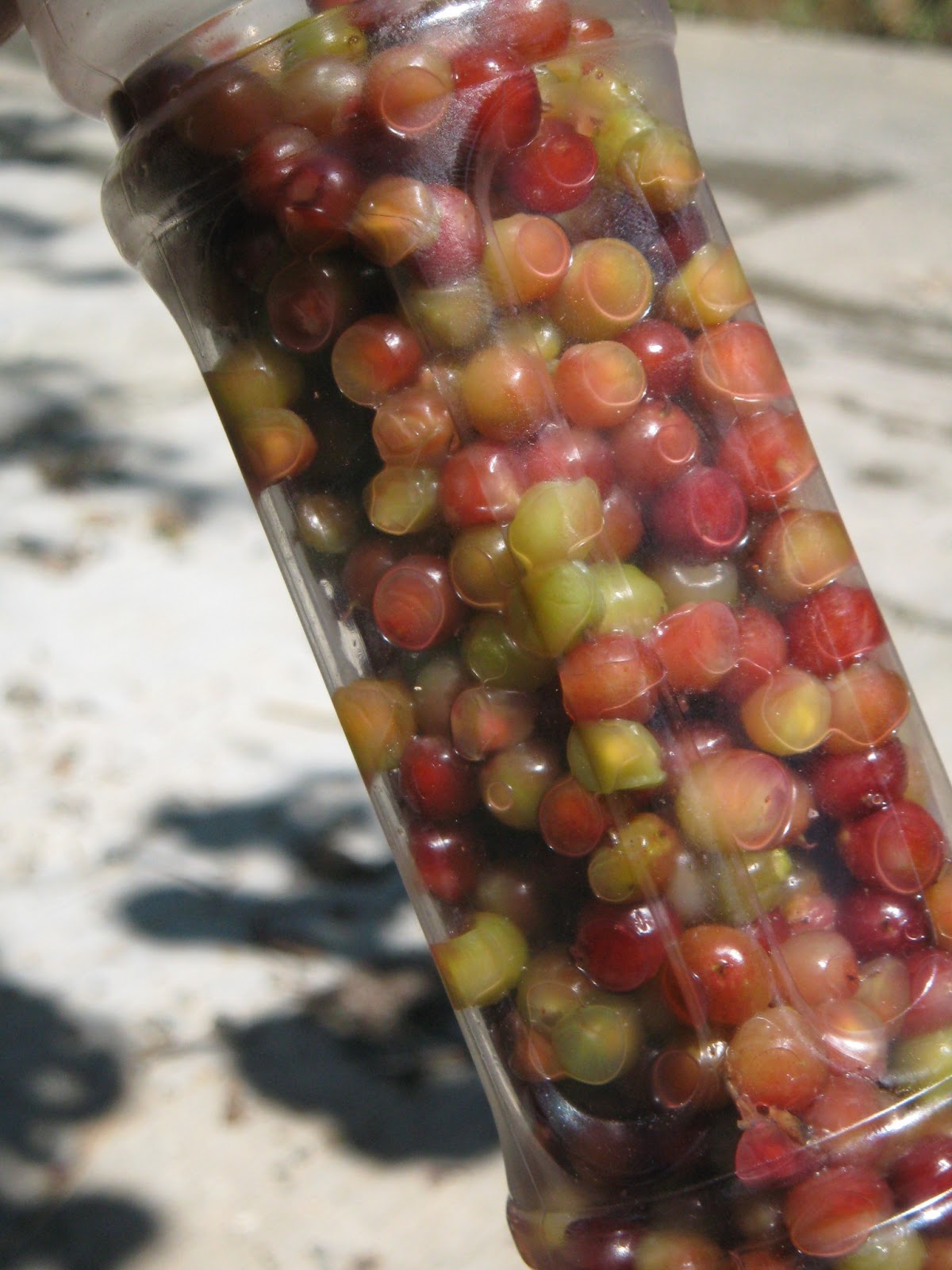
And in Banawe little boys were clambering up the trees for the birdfeed. They put the little multi-colored berries in a plastic bottle with a little salt, proceeding to tilt it up on their mouths when enough juice has leached out. Cafe By the Ruins in Baguio City sells jam made from the fruits, and I have seen bignay wine, also made from the berries, being sold by the public market.


Bignay Tea available in the weekend stalls of selected SM Malls in Metro Manila.


Related Posts


Saturday, December 08, 2012

Buko Shake


Buko shake stalls now dot the metro scape and the neighboring provinces, and ever increasing. I say it's about time! The idea is quite a bit late, coming after those bubble shakes made of synthetic flavored powders, and bubble teas tasting of phony milk powders.

This one is all natural, all-organic, and omnipresent. In short effortless to make. It's a wonder we've only realized now that it's a steal to make buko shake commercially available.

Buko - young coconuts - has been ubiquitous from ancient times, I'm sure. I grew up eating the tender white, sweetishly creamy meat, and drinking the refreshing water, from mobile carts, market stalls, roadside kiosks, each "nut" opened only upon purchase. Only a sharp, glinting bolo is the required tool, for slashing through the fibrous bunot.

Through the years, innovations were introduced, like a bunot-less nut cold from lounging inside an ice-packed styrofoam chest. Then covered cups of buko juice with several slivers of young coconut meat were commercially available for a time, in malls and and roadside stores, but these were too sweet - they had to be sweetened enough to last for days. 


Buko deteriorates fast. I've made enough buko salad that turned sour to know that once a buko has been opened, the meat has to be consumed right away, or cooled at  once in the ref.

Buko is a natural thirst-quencher, as well as an effective cure for hang-over. It's also drunk for urinary tract infections. But we avoid having it in the afternoons, as it can induce, ironically, stomachache. Early mornings glugs of it is most wise.

I still have to find a stall that offers buko shake that I like, though. It's either the sugar syrup is over the top, or the coconut meat used is too mature that it should have been made into gata.

But that doesn't keep us from having too many shakes. Just a couple of young coconuts from the market, a cup of vanilla milk, two cups of ice, some sugar (or not!) and my trusty Oster, and there's buko shake for the entire family. We can have a white Christmas, after all!


Related Posts
Crema de Fruta