Showing posts with label illustrious leaves. Show all posts

Thursday, August 15, 2013

Alugbati

This is one of five endemic leafy vegetables promoted by the FNRI to be a regular part of the Filipino diet, as they have been found to be extremely nutritious and are mostly organic.

When the family moved to Cavite I felt I was in abject deprivation. This was in view of the vegetable selection in the area. I was as far as I could be from my hometown for all it seemed. The kamote leaves being sold were red, the string beans were unbelievably long, pale and so wrinkled they looked ancient. And of course there was no baeg, no sitaw shoots, no heirloom tomatoes, no black beans!, and it was mission impossible to find a decent drop of bagoong.
But as I adjusted and got to know the public market better I began to feel a sense of adventure. I was in Tagalog country, and it was an opportunity to explore. So with this attitude I began to see the distinctions of a Tagalog market. Where there were empty spaces where I felt should have been my Pangasinan staples, there were other corners presenting new ingredients I haven’t cooked with before. And spread before me were an array of plant parts that I certainly haven’t eaten before.
One of these were the ruby-stemmed and succulent-leaved alugbati  vine tops being sold alongside rogue kamote, kangkong  and saluyot. It was funny because when I asked the vendor how the tops were cooked she said she didn’t have an idea, but that they get bought by the end of the day so they must be edible.

I learned from a DOST-FNRI seminar that these leaves come from one of the five endemic organic plants that are packed with nutrients.* Of the five I grew up eating only one, so I resolved to swiftly remedy my parents’ neglect. I don’t blame them, though, since most of the other four weren't really regarded as food in my province, and our diet featured prominently other much more nutritional leaves (hello, malunggay and saluyot). 
The first time I ate alugbati (libato, malabar spinach, Basella rubra) was in a kind of pinakbet – okra, eggplants, tomatoes and alugbati boiled in salted broth – served at our office canteen, so I wrongfully concluded alugbati was an Ilocano vegetable I didn’t know about.  So that was how I first tried to cook it at home. Even without the DOST seminar I couldn’t overlook it during my weekly marketing, for they are ever present no matter what the season was.
But it did not become a favorite. The flavor isn’t pleasant – very earthy, pervading the entire dish. The alugbati turns mucilaginous when cooked, though not as evidently phlegmy as saluyot or okra. It also loses its magenta hue, becoming nondescript brown like most Ilocano veggies.

One rainy weekend there was a dearth of vegetables at the market, but there were bunches of ever attractive alugbati. The vendor told to me to buy some to cook with albacora (tuna albacore), which were plentiful that time. Ever eager to try new dishes and bearing in mind that DOST touts them as a superleaf I followed her instructions, with happy results.
Albacore steaks are seared both sides in a pan. Then sauté garlic, lots of onions and a heaping  handful of sliced ripe and juicy tomatoes. Then mix in the alugbati tops that have been trimmed of the tough lower stems. Let cook until wilted, season with salt and pepper, then add the albacore steaks. Cover and let cook for 2-3 minutes or until the sautéing juices have been absorbed by the steaks.

It is a delightful confluence that albacore tuna and alugbati are both accessible at the Cavite public market. My weekly meal repertoire became enriched, in variety, flavor and nutritional benefits. For this dish I love to cook again and again. The sweetish acidity of the tomatoes downplays the earthiness of the alugbati, which in turn tames the tomatoes’ sourness. The addition of the high-protein, low-fat tuna packs it all in and transforms it into a rounded, one-pot meal.

But the story of my discovery doesn’t end here.  One Saturday a lola sat beside my son at the waiting area of the public market while I finished marketing. When I came to collect my son and the fruits of our labors that day, the lola asked me if I was a Bisaya. I was confounded, for it was my first time to be asked that question. She proceeded to explain that she noticed the alugbati leaves protruding from our bayong, and thought that we were Bisaya like herself. She went on to say that alugbati is planted everywhere in the Visayas, and they frequently eat it mixed with stewed monggo (with gata), or sautéed with ground pork and tomatoes.

My alugbati menu suddenly lengthened, and that fateful weekend I planted in my little garden patch the stems of the two bunches of alugbati that we had bought at the market. I went to Facebook, and friends in the Visayas and Mindanao confirmed that the vegetable is common enough where they live. 

So now I know that that first alugbati dish I ate was a kind of Bisayan utan. We tried it again just last night, with alugbati tops from my garden, but this time we had the vegetables sautéed with home-made bagoong alamang and left out the ampalaya since we ran out of it. It was as good as it could be. Like pakbet, but the alugbati flavor took the place of the bitterness of the ampalaya, so it wasn’t as sharp. It was so good I had to set aside some to bring to the office for lunch the next day.

I again took to Facebook, and my Pangasinense friends retorted that they knew alugbati as, along with kangkong, good fodder for pigs. Lucky pigs, to be so nourished. I hope the nutritional benefits get translated into enriched meat, so I won’t have to pity my friends. 

*Alugbati purportedly contains phytochemicals and anti-oxidants, and is rich in Vitamins A, B, and C, iron, carotene and nitrates, and a good source of soluble fiber.  It is used to treat headaches, inflammations, acne, and burns and scalds, and used for catarrhal infections, hemorrhagic diseases. It is said to be a galactagogue, as well as used for fertility and other sexual issues.


The Philippine Organic Super-Leaves

Related Posts

Tuesday, March 12, 2013

Spinach Amaranth


This is one of five endemic leafy vegetables promoted by the FNRI to be a regular part of the Filipino diet, as they have been found to be extremely nutritious and are mostly organic.
Supposedly known as edible spinach or yin tsai or Chinese spinach (Amaranthus gangeticus), it is different from the more popular Baguio spinach, which has thicker leaves and stems. The amaranth has paper-thin leaves that go limp and wilt in just a few hours, the stems just a tad thicker, like that of the saluyot. The short sprouts are uprooted, so the leaves come to the market still sporting muddy roots.
I've only just seen several bunches at any one time being sold in the Cavite City public market, and only by just one or two vendors. I haven't come across it in the vegetable section of the several supermarkets I frequent, but large bunches of it is available in Divisoria. My lola in Frisco used to buy lots of it from the Balintawak market.

It is not sold year-round. Just a few weeks a year, and one time it appeared just once, then disappeared never to be seen again. I've been buying it for several weeks now, though, so it must be in season.
Before I came to Metro Manila I never knew about this spinach, though I bought Baguio spinach when I went to the mountain city. We didn't eat it, and as far as I know it wasn't sold and eaten in my hometown. I only came to know about it when it was served at the Frisco home of my lola, mixed with monggo in lieu of the more traditional malunggay.
When I attended an organics seminar conducted by the Food and Nutrition Research Institute of the Department of Science and Technology and learned that, apart from malunggay, there are five local organic greens that are super-packed nutritionally, and that this spinach is one of them, I kept a look-out. So I've been having it ever since whenever I can find it.

And I've just realized I've foregone Baguio spinach in favor of it. It's cheaper by the kilo, since it weighs far less, and it's more accessible when in season. There seems to be no difference in taste, and even in texture. I think what I buy is the white, round-leafed variety.
I've heard some people mix this with sinigang, that ubiqiuitous Filipino soured broth with meats or fish. But I haven't tried it yet. I have difficulty parting with tradition - I have kangkong with sinigang using meats, or kamote tops with fish. I also ever use malunggay or ampalaya leaves in my monggo.

Maybe that's because I like to eat spinach by itself. Sauteed with lots of crushed garlic - as much as a whole head - until wilted to a dark green. For crunch and an additional dose of garlic breath, I sprinkle the sauteed spinach with minced garlic fried to a crisp. Season with salt to taste, but it's not necessary, especially if it's going to accompany some fried or grilled fish or meat.

It can be served hot from the pan, or cold with a generous douse of sesame oil, and some sesame seeds as well.

I think the sauteed spinach and the popular "green soup" or spinach-seafood soup served in many Chinese restaurants, which I order every chance I get, use this variety.  

Amaranth is a rich source of calcium and Vitamin A. It also has phosphorus, Vitamin C and traces of the B vitamins thiamine, riboflavin and niacin. It is a good supplement food for growing children and lactating mothers. Patients suffering from fever, hemorrhage, anemia or kidney problems are given amaranth for its medicinal value.


The Philippine Organic Super-Leaves
Kamote
Alugbati

Related Posts
Mung Bean Stew

Wednesday, January 09, 2013

Bignay Tea


My husband suddenly had a blinding headache, and went straight to the emergency room. His blood tests showed elevated levels of LDL and uric acid, along with a few other minor abnormal indicators. He was given four-day prophylactic medicine for the cholesterol, and advised on which food to avoid to prevent his uric acid levels from escalating to new heights. 

I won't take any blame for this - men, you can't force them to eat fish and vegetables all the time. And fish? He'd only eat some when it is fried. And of course he didn't eat at home most of the time, so I really had no control over his diet. 

He was scheduled for repeat tests after a week. Two days before that he talked to somebody with the same problem who had a major breakthrough. He talked to a lot of people, actually, but not to me. Actually I was the one who wasn't talking to him. I was spittingly mad to have been proven right that I wanted him to come begging on his knees.

But this one person, this guy, he said he drank bignay tea in two days and all his tests came out all right. It was available in Greenhills, he said. The husband recounted to me the conversation, while I pretended to barely listen. I never go to Greenhills, let alone scout some folk remedy. Then he searched the internet and showed me a photo, which I grudgingly looked at, with dagger eyes.

And I remembered we had just the exact same thing in the house, given by a benefactor and almost forgotten, along with other teas that I thought I had no use for, but now glad that I didn't have a predilection for throwing things away.  


It looked like sawdust. The foil pack supposedly contained bark, twigs and leaves of the bignay tree, which I never knew existed until a few years ago when the kids and I went to the Manila Zoo and encountered a manang selling its fruits, but which people at the office told me was bird-feed. 

The pack said the tea melts cholesterol and lowers blood sugar, creatinine, triglyceride, SGPT and SGOT. Cures UTI in 48 hours. And a host of all the illnesses and diseases the world has known since the advent of time, including hangover and erectile dysfunction. In short, a superpower that is actually the eternal fountain of life.     


But time was running out, and the repeat blood test was a milestone one not only for my husband, but for our entire family, as well. So I brewed some - a tablespoon for every four glasses of water, boiled then simmered for 10-15 minutes. 

It brewed to a nice amber color, but it was tasteless. The prescription is a liter of tea a day, which can be drunk hot or cold. The husband had it as water for two days.

And when the big day came, he passed all his tests with flying colors. His uric acid even came out negative, as in [-3], he gloatingly told me.

So now I've been recounting this to all the people at the office, who are all advanced in age. I've given packs of the tea as Christmas gifts, even to my househelp, who requested it for her mother. And to friends with whom I get frustrated when we eat out because they tell me they can't eat this and that because of uric acid.  

I can't vouch for all the other illnesses this tea purportedly cures, but uric acid I can guarantee, for I have an almost first-hand experience. I can't say how long-term the effect is, though, but truth to tell I've bought packs for the family, too. The kids and I have been having it once a day, infused with our evening juice. I'm hoping it counters our liking for offals and longganiza.


Subsequent to that trip to the Manila Zoo we had encountered bignay trees in Bohol, flourishing by  Bolod Beach in Panglao Island. 


In September they were crowned with ivory cottony blooms that perfumed the sea breeze with sweetness I wanted to bottle up. We had nice siestas on hammocks strung beneath the tree canopies.  Maybe the flowers were potently curative, too.


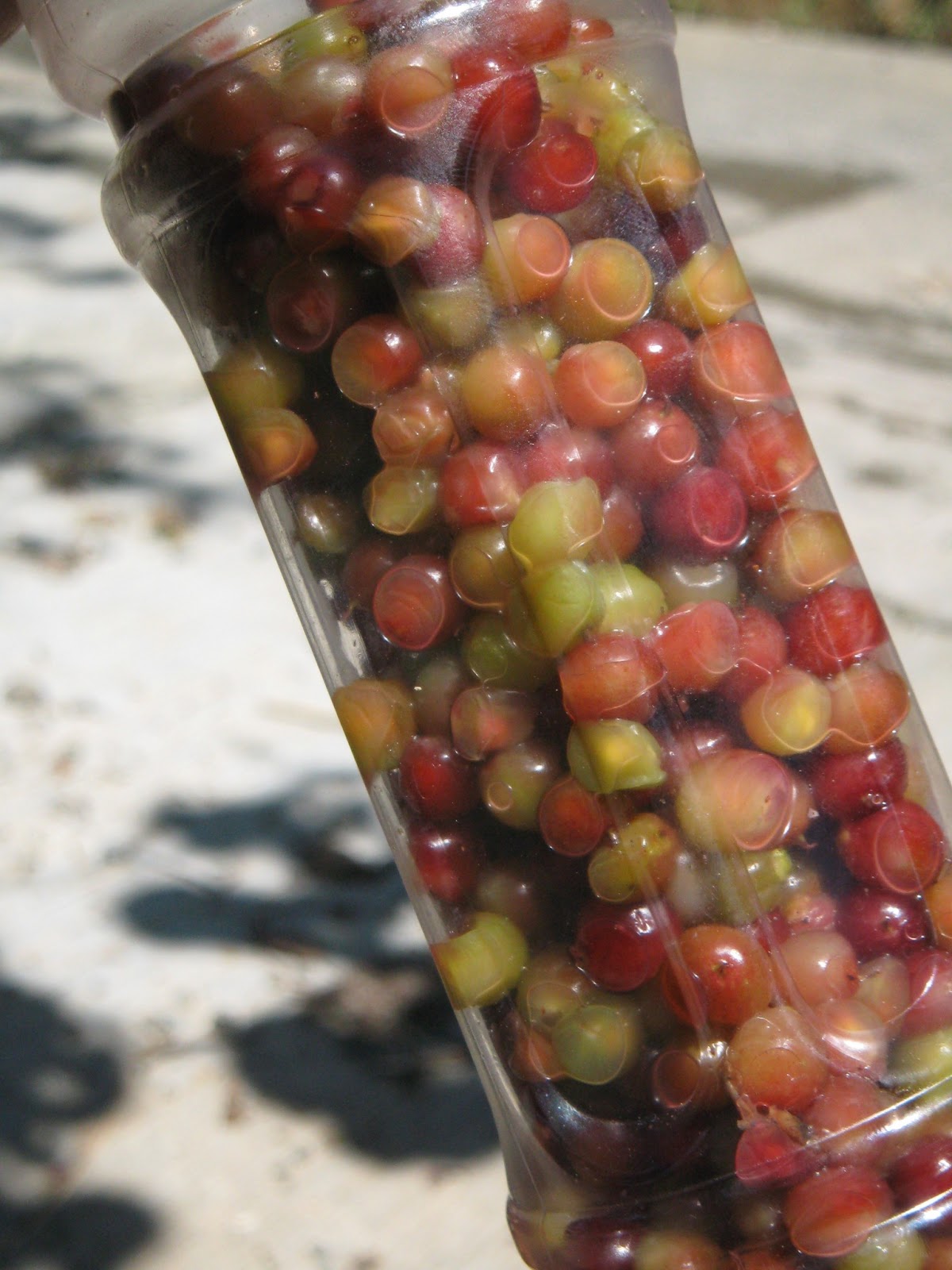
And in Banawe little boys were clambering up the trees for the birdfeed. They put the little multi-colored berries in a plastic bottle with a little salt, proceeding to tilt it up on their mouths when enough juice has leached out. Cafe By the Ruins in Baguio City sells jam made from the fruits, and I have seen bignay wine, also made from the berries, being sold by the public market.


Bignay Tea available in the weekend stalls of selected SM Malls in Metro Manila.


Related Posts


Friday, November 02, 2012

Avocado-Guyabano Pandan Tea


It is All Souls' Day today, the Philippines' nationwide remembrance of the dead. It is a good one this year, with four days off from work, as the first two days of November fell just before the weekend. But we had been raised to pay our respects to our ancestors on these days, so we never schedule a trip out of town around these dates to take advantage of the holidays.


So we are home in Pangasinan, and what a day to face our own mortality. I've reached the age when my elders are now senior citizen card holders, naturally afflicted with aging complaints. It's Undas and we talk about cholesterol levels and uric acid and kidney problems, and the various natural ways to maintain them at healthy levels, to delay, infinitely if possible, the time when we have to join our dead elders and take our final repose at the town cemetery. 


So now, instead of iced Pop on the table, we are served avocado-guyabano tea, made with seven leaves each from the fruit trees, steeped in boiling water til the liquid has turned amber. It is a folk remedy to aid in easing cholesterol (the bad one) levels, and many other things besides. 

There have been reported studies abroad proving this concoction's efficacy, though I'm not sure if they are supported scientifically. But the folks in my hometown reportedly swear by it, and my aunt-in-law tells me she has become a sort of "supplier," giving leaves to a lot of her acquaintances downtown (baley, in the dialect). 

avocado leaves

Sounds a bit like Mexico? And if I remember correctly, the fruit trees came from Latin America, too. But the aunt-in-law hasn't gotten rich all of a sudden. She gives the leaves gratis, for she has a very green thumb (makatanem, my husband likes to joke*), and she has several younglings growing in the backyard.

guyabano leaves

We have the tea from morning til night, squeezing in it some lemon juice to accompany dinner. I let the kids drink up, too, as my elder daughter has become attached to dishes made with internal organs, and my son daydreams about junk food. 


I found the tea to be bland, and very near tasting like boiled water, so for the next batch I added several blades of pandan. I remembered the pandan-avocado tea served at Earth-Haven in San Mateo, Rizal, which I had been wanting to recreate but didn't have access to an avocado tree.  

I found the previously lush pandan by the twa-to (manually-operated water pump) made panot by chickens and ducks. That was a revelation - I wonder if their eggs taste differently?

The pandan elevated the drink, which had become aromatic and flavorsome. Mixed with a little sugar and served cold, it tasted like sago't gulaman. Without the sago and gulaman, but with the cleansing power of avocado and guyabano. But who says we can't have a little fun? Guess what I'm thinking of adding to the next batch.... 


As further proof of the aunt's makatanem status, vegetables are available for the picking for today's lunch. Near the bamboo groves katuray flowers are flapping like opaque moths in the gentle wind. 


And right beside the kamote and kangkong carpeting a large swath of soil is a young baeg with flowers suspended vertically like pupae waiting for their metamorphosis.


In the summer looking up this tree would be heart-racing, in contemplation of the reward of sweet fruit. But it is not aratiles season now, though I heard the leaves are made also into tea. I didn't quite catch what  ailments it cures, I'll have to ask the elders.


This is the plant that supplied the leaves that were made into the tea which we drank when we suffered from stomach trouble when I was growing up. It sprouts tiny red berries, which are slightly bitter with sour edges. I had believed this was the tea plant, so I was unbelievably surprised to learn Ceylon tea comes from a plant that's entirely different. 


*Literally the word makatanem may mean plants thrive under her care, but figuratively it can also mean she has the capability of engaging in voodoo.

Sunday, August 19, 2012

Utong na Kamote


This is one of five endemic leafy vegetables promoted by the FNRI to be a regular part of the Filipino diet, as they have been found to be extremely nutritious and are mostly organic.
I expect there would be unwanted traffic for this post because of the title, and it is just a continuation of the laughs I got when I went to Manila for college and talked about this vegetable.

The title means kamote tops, or the young shoots of the sweet potato. In Pangasinan we distinguish this from other kamote varieties by the term kamote waklay (Ipomoea batatas Linn.).
Kamote tops was one of the few vegetables I embraced willingly as a child. It was omnipresent - grown in the front, side and back of every house and just about anywhere there's a small patch of available soil. Consequently, it couldn't be found at the market, and it was just laughable to think of buying some kamote tops when it could be got everywhere.
It was mild in taste, though a bit rough on a child's tongue because of the thick but tender stalks. We always had it in sinigang na bangus - milikfish in soured broth. The sourness came from tomatoes, or pias, and the kamote shoots enhanced it due to an inherent slight fruity tang. It was the unequaled backdrop for the bangus, with its milky-sweet flesh and rich belly.
 When I got older I was able to partake of the tops simply steamed, then dipped in bagoong Pangasinan squeezed with kalamansi. This accompanied grilled or fried fish, and rounded up a simple and rustic but exceedingly nutritious meal with hot boiled rice.
However, I only recently discovered that putting the tops in a soup is actually the optimal way to eat them, since the nutrients leach into the liquid. I've been advised that when steaming, the liquid should be drunk, so I mix it with our daily juice. 
All my life I've only ever known the "puti" variety, as what the all-green kamote leaves are called in Metro Manila and its environs. It was only in Cavite that I came to know the red, or red-violet kind. Bicolano friends tell me the opposite - it is only this variety that they know.

The red-violets can be very pretty. The young shoots come out in rogue, then turn green as they mature. Sometimes I come across all-red tops at the market, and they are quite striking.
I was told that the sanguine kind is more nutritious, but I find I like the puti variety I grew up with. The red-violet stains the broth...

...and dyes the fish an unappetizing blue.

Kamote leaves are one of five, aside from malunggay, organic, endemic leaves that are bursting with nutrients and have natural healing powers. I eat most of these bionic five, but  have just discovered some of them. I will be featuring them all in the next posts.


Steamed Kamote Tops

2 bunches kamote tops
boiling water
kalamansi
bagoong

  1. Wash the shoots to remove dirt and grime. Trim mature leaves and tough stalks. 
  2. Bring half a pot of water to a boil.
  3. Put the cleaned kamote shoots into the boiling water and let cook uncovered for about 2 minutes.
  4. Using a slotted ladle, remove the shoots from the cooking water. Let the water cool and set aside, to be mixed with tea, iced tea or cold fresh fruit juice.
  5. Serve with a dipping  sauce of three tablespoons bagoong squeezed with the juice from a couple of kalamansi.


The leaves of the sweet potato are rich in Vitamins A, B and C, iron, calcium and phosphorous, and along with the tubers, are a good source of complex carbohydrates and dietary fiber. They are considered antioxidant, antimutagenic, antibacterial, antidiabetic, and also hemostatic, with spleen invigorating properties.

The kamote plant does not only benefit humans. It is one of a few believed to have the capability of regenerating nutrients in the soil.


The Philippine Organic Super-Leaves

Related Posts


This is an entry to the July cooking challenge of the Kulinarya Cooking Club, of which My Expat Mommy and I were hosts. Our theme for the month was Pang-Habang-Buhay,  to give emphasis to vegetables and fruits we should be eating often, and in conjunction with the observation of Nutrition Month. 

The entries to Pang-Habang-Buhay:
Theodore's Som Tam (Chef By Day)
Ogg's Tofu

Saturday, June 23, 2012

Weeds of my Childhood

The continuous rains the past week due to several typhoons racing one another along the eastern and western coasts of the archipelago have enlivened the growth of weeds all around the house. Grasses have shot up at least a foot, and close to the ground mini jungles have grown lush.


I scheduled lawn-weeding as a home weekend project for the kids this morning, but we ended up not being able to uproot anything. Being close to the ground I suddenly remembered that weeds took up a good part of that carefree time that was my childhood. 

Like that cliche lightbulb, something lit up for me - I now understand why my kids are so obsessed with footwear, and they can identify whose pair it is without fail, and will even point out that somebody is wearing somebody else's slippers.    


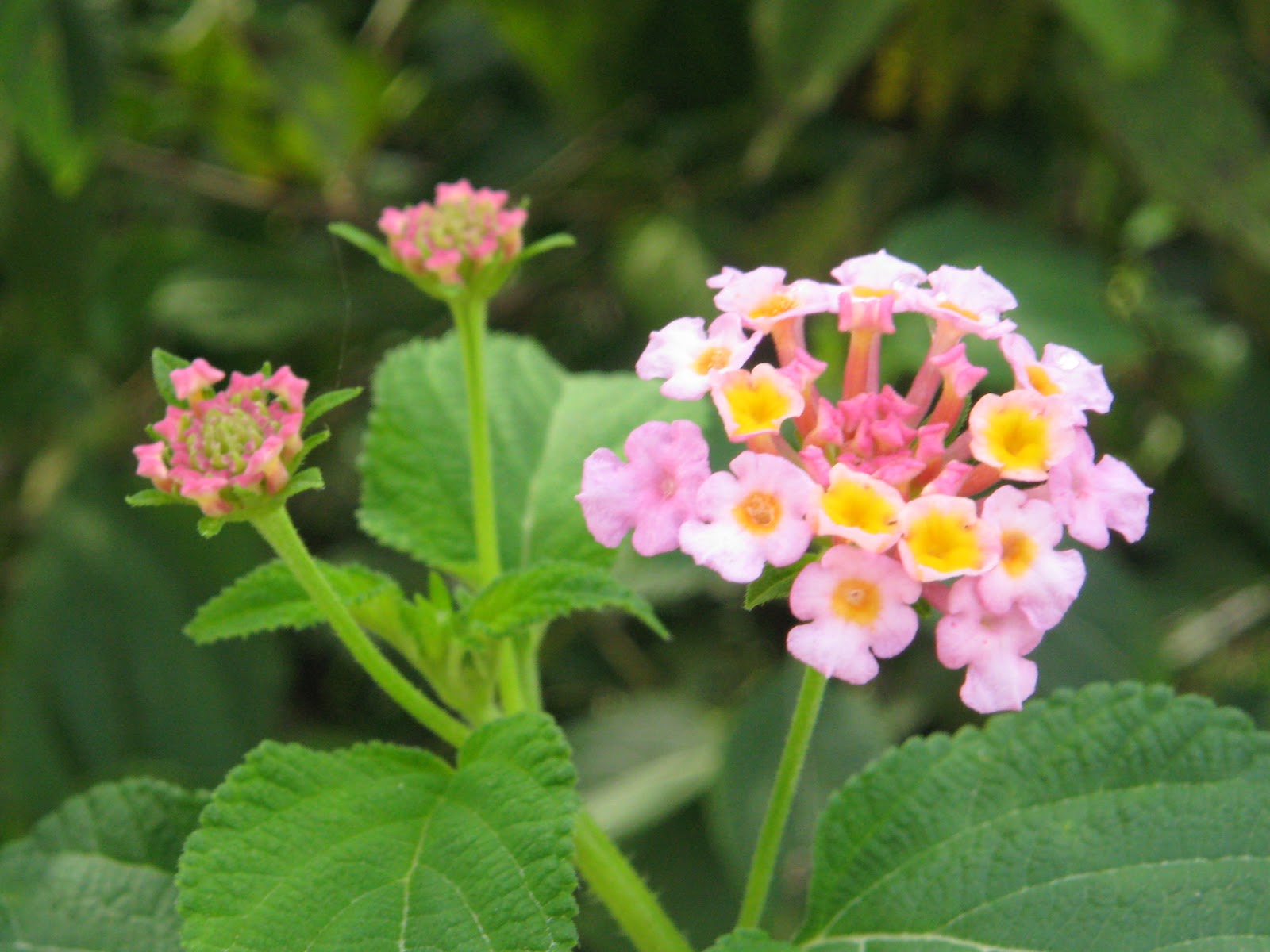
I don't know their names, and it's difficult to research them, but these weeds grow everywhere in the country.  These pink-yellow tiny blooms ward away children with their bitter fragrance, but they are a lively addition to the flower baskets offered daily at the altar during the month of May.  


What kid is not well-versed with the magic of the makahiya (shrinking mimosa)? For girls its pink ethereal flowers are as desirable as the hard-to-resist urge of touching each and every frond of tiny leaves, until not a single minute leaf has shrunk onto itself.


The explosive magic of this flower is more attuned to boys' hard play, but I had endless happy days gathering the hardened pods and submerging handfuls and handfuls of them in a shallow basin of water.    


I wonder if my mom worried about me and my playmates taunting fate with this plant. I certainly had more than one instance of seeds lodging in my eyes. But perhaps I didn't suffer that much, because I'm not worried  about my kids, who discovered this kid-bomb on their own and with their friends. I taught them afterward  that's it's cool to put one pod inside your closed mouth, tingling with anticipation when it would explode.


In Cavite there is a different plant with sword-like leaves, but with the same kind of flower in pink and white, and the same bomber pods. 

Of course I couldn't resist turning this into a chance for reinforcing learning, as both my gradeschoolers have gone through the subject of seed dispersion. 


Elders told me that this is eaten in some places, but I've never had it, as I haven't met anyone who eats it who can teach me how to prepare it. It looks likes it's good in a fresh salad. 

A variety of tawa-tawa (asthma weed, snake weed, fei-yang ts'ao, Euphorbia hirta Linn.) that's been used for asthma, and is now making a name for its anti-dengue properties. It's quite abundant in any weed/grass patch, and ours in Cavite is purely bright green with no violet edges like those in the photo above, which was taken in a golf course in Cabanatuan City.


Amor seko (crabgrass), whose barbed seeds lined the hems of our skirts and short pants after a day gallivanting in the fields. They are the bane of labanderas (laundrywomen), when it is windy and the dried clothes hanging on the the lines drop on the grass. 

Wednesday, April 18, 2012

Papait


Perhaps to remind us of what Lent is all about, clumps of papait with lush green leaves were omnipresent at the public market in my hometown in Pangasinan. Literature in the internet suggests the weed is seasonal, but this was the first time I have seen it being sold. Of course I was not a prolific market-goer in my childhood, but papait never appeared at our table, and my in-laws have not cooked it before. 

The leaves looked similar to the Baguio spinach, in the shape, size, color and thickness of the leaves, and indeed they belong to the same family. They looked harmless enough.

Perhaps I have not seen it before because it wasn't sold before - it grows at will, gathered freely in empty fields, or in the kaalugan. Perhaps we never had it, as neither did my in-laws, because of its reputation as the bitterest thing one could ever eat. But I wonder, because we eat ampalaya - the leaves as well as the fruit - like it's fried chicken.  


Since there were more papait at the market than ripe tomatoes, which was alarming, and there were as many papait as there were sibuyas at this time of the year, which was normal, I couldn't deny fate, and I had to buy. An in-law was with me that time, and I uttered aloud my decision. She didn't seem thrilled, but replied, sige, ag mo ni atawayan sirin? (okay, so you haven't tasted it before?). 

Vendors confirmed the leaves were ampai-pait (too bitter), but that they cure a lot of illnesses and various afflictions. They also volunteered that the leaves are traditionally sauteed with tomatoes after parboiling them.  

I was thankful for those freely given information, because when we got home it turned out nobody at my in-laws' household knew how to cook papait. The designated cook hemmed and hawed, uttering out loud she'd boil the leaves briefly, then after a while recanting, until she decided not to cook them, wrapping them instead in banana leaves and shoving the lot in the dark confines of the refrigerator.


At Php10 per bundle, I thought nothing would be wasted if the leaves withered. But I thought again that it won't be money wasted - it would be the opportunity to learn something, and that something was significant because it concerned the food culture of my hometown, and a big part of Luzon, as I learned afterwards.   

So I was nothing but persistent, and pointed out one day soon after that it would be nice to have the leaves as a counterpoint to the igado we were having for lunch. So the leaves were dug out from their burial place, and were promptly sauteed, without the advised pre-boiling. There was a bit of "soup" in there, because the leaves were not thoroughly drained after washing.  

The cook is what elders call "makaluto," because she can cook ampalaya fruit which turn out with only the slightest hint of bitterness that children spoon lots of it onto their rice. Maybe that magical quality also lent itself to the papait turning out to be not as bitter as foretold.

It was bitter, but not so bitter that it was intolerable. In fact it was milder than ampalaya leaves. The bitterness was normal, in the same acceptable level as, say, mustard greens, or bokchoy. I think it would pair nicely with balatong, or with chopped pechay, if I can get hold of a bunch again.  And I will buy again, if I see it. It would be a good addition to my green leafy vegetable repertoire at home, and who knows we might benefit from its purported healing powers. 

So I was glad I chanced upon papait, and we had the courage to cook, and eat, it. Good discoveries happen to the brave.


Papait is the term for this vegetable (weed actually) in Pangasinan and Ilocano. It is known in other areas of Luzon as amargoso and sarsalida, and elsewhere as bitter leaf, slender carpetweed, cheng geng xing su cao, with scientific name Mollugo oppositifolia Linn. It is eaten to combat diabetes, hypertension, anemia and various other ailments.

Links
StuartXchange
Living With Nature