Showing posts with label ambabangil (samu't sari/eclat). Show all posts

Wednesday, March 05, 2014

Cleansing Time

I am undergoing a kidney and gall cleanse, and I thought it fitting to start today, Ash Wednesday, so I will have outstandingly fulfilled the fasting and abstinence requirements. The cleanse goes for a full four days, so it takes care of the first Friday of Lent, too.

This wasn’t pre-planned, though, just coincidental. I had come across this cleanse around twenty years ago, and had been meaning to try it, but for various reasons it had eluded me. Prominently, I had always talked myself out of it because I couldn’t take three days off from my active lifestyle. But I guess at the back of my mind there was the thought that I was young. Young and invincible.

That phase, sadly, has gone by. I am still healthy, and haven’t been confined ever in a hospital unless it was for giving birth. But I am noticing little changes which make me aware of the wear and tear my body has gone through these indomitable years.

Anyway, I had been on medication to treat an infection the last five days, and yesterday the repeat lab test showed the infection had been overcome. The elevated red blood cell count, however, has not improved. Because I am a girl, some gender-particular factors have to be considered, and so the doctor opted to wait out two weeks. After that I undergo another lab test, and depending on the results I may have to be checked for stones.

That I may have stones got me agitated. My employment requires mandatory regular general check-ups, and except for some stubborn fat, my tests have always come out clear. My diet consisted mainly of fish, vegetables and fruits, and I've tried to avoid anything processed as much as possible. I drink gallons and gallons, and more gallons, of water every day. At home we drink freshly-squeezed kalamansi juice at dinner. Stones? Impossible.

I cannot wait out the two weeks, so I thought I’ll be proactive about it. Honestly, I don’t think I have stones,  but I’m taking this opportunity to cleanse my body, hoping in the end that I shed off some pounds, too. I had been travelling these last four months, out of the country and in and around it, and of course when on trips all caution, and diet, are set aside. I had eaten my way from restaurant to restaurant to cake and dessert shop across all the regional centers in the Philippines, and four months of that probably reversed the healthy living I had maintained for most of my life.

The first time I came across this cleanse it was a three-day affair, involving apples and apple juice. Now it seems to have evolved, stretching to four days and requires an exclusive apple juice intake. There is a daily saltwater flush, too.

It goes like this – drink up to a gallon of apple juice and up to a gallon of distilled water daily for four days, no solid food intake and no other liquids. For three days a saltwater flush, consisting of two teaspoons rock salt dissolved in a quart of warm water, is drunk first thing in the morning. On the third night before going to bed slowly sip half a cup of cold extra-virgin olive oil, followed immediately by  ¼ cup undiluted freshly squeezed lemon juice. Sleep lying on your right side with two pillows under the right hip. Continue with the apple juice and water intake the following day, then gradually incorporate solid food, preferably vegetables and fruits initially, into your diet beginning on the fifth day.

So finally I’m trying it. If in the end I don’t expel stones, I will smugly wait out my repeat lab test. If I do expel stones, I will be stricter with what I eat. But either way, I would have cleansed my body, at the same time I have complied with my religious obligations. In the meantime I’ll continue writing about my travels. If I could, that is. If only this could go on for forty days so I could look young, and invincible, again. But then again let's see if I could even last the four days. 


Related Posts

Monday, November 11, 2013

Tabang Tacloban


Amidst all the grief, the hunger and thirst, the confusion and chaos, the looting, the lack of security and sense of order, we are with you.

[unedited photo taken at sunset from San Juanico Bridge, Tacloban City, March 2009]

Wednesday, November 06, 2013

A Weekend at Casa San Pablo

I am on the homestretch. I have secured the necessary approvals for my (unexpected) office project, which, after the first approval, gave birth to another, and another, until I had in my hands a total of four projects with the go sign. In between approvals I formulated and wrote the implementing guidelines, and now just two final signatures are needed and they’re all raring to be rolled out, across the country.
But I, too,  am a mother, and where kids are concerned things do not take a backseat to a job, never mind that the job is sending them to school. So amidst all the pressure at the office I had to take time to train my children for extra-curricular activities, design and execute costumes, actually be present during the presentations to cheer and to document, aside from assisting them in reviewing for their regular exams. To top it all off, my son, who declared last year that at ten he was too old for a birthday party, suddenly wanted one this year.  
I am never one to refuse a party, so I rose to the occasion. I planned, enrolled in a dim sum making class, went to Divisoria during Saturdays and thank-God-there-are-holidays, made invitations and party favors during office breaks. I prowled the accessory sections of department stores during lunch hours, sewed sequins, beads and bells late at night. There’s nothing like all the research and analysis I’d been doing at the office to fuel my need to be crafting and executing with my hands.
I realized that it’s never too late in life to learn efficient time management. I have accomplished so much in a span of six months, yet still managed to run a house, keep a job, and go on raising three kids. Mid-way I actually even went out of town to take a break, which turned out to be partly responsible for keeping me sane to this day so that I can see everything through.
Now that I can breathe again, I’d like to share that mini-vacation. Just an overnight trip really, two hours away from Manila. Spent Friday night soaking in the hot spring in-room pool of City of Springs, and by Saturday morning we proceeded to Casa San Pablo to catch the in-package lunch and to revel in the afternoon lull.

I waited for a Saturday night vacancy at the inn for more than a year before I was able to get a casita. It usually takes months of advanced reservation, but on the week that I thought I could not last for a few more days at the office I was able to get the best-selling room with just two days advanced notice. 
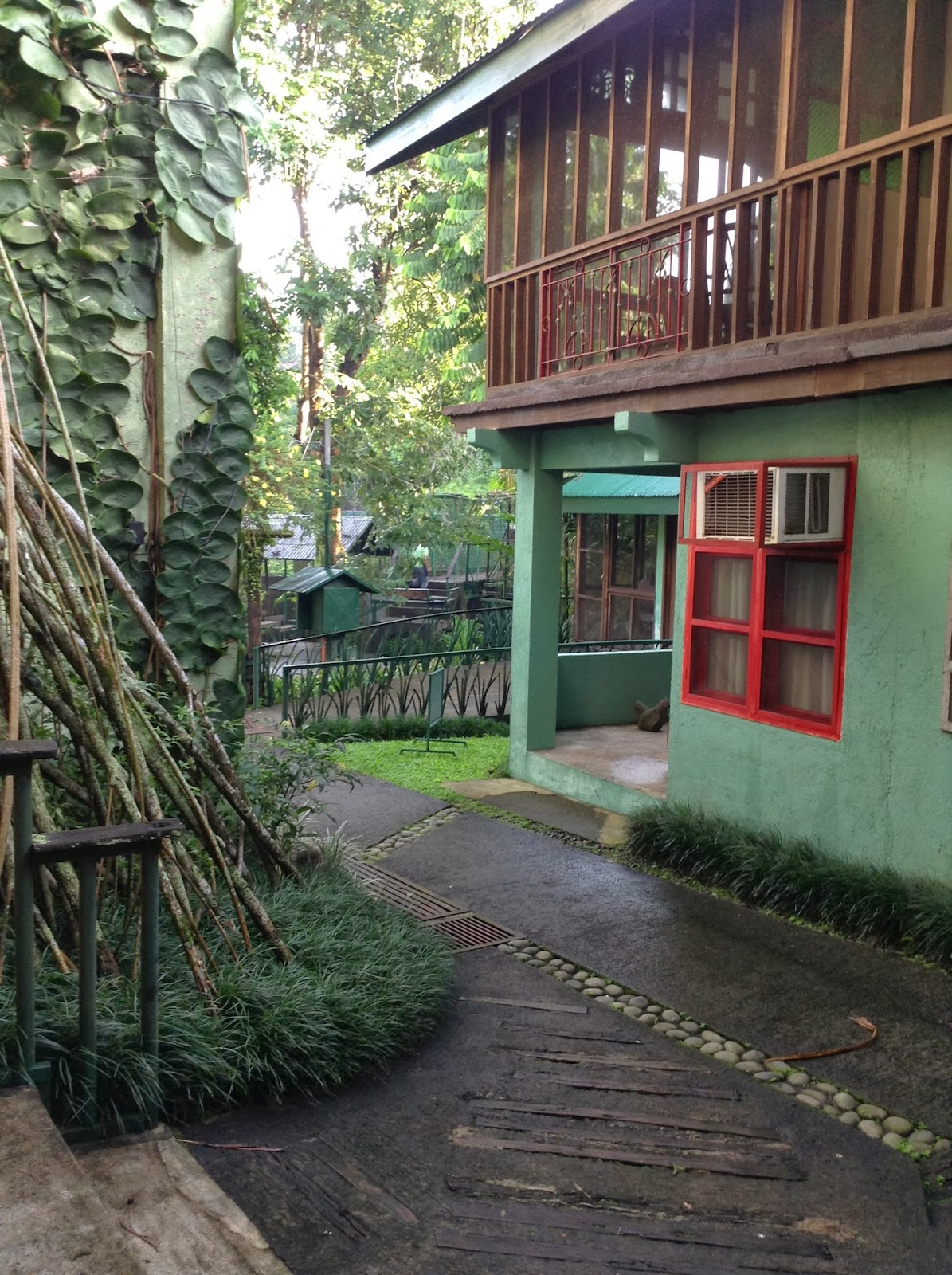
So we went, and let the relaxing pine-tree-surrounded bed and breakfast complex wind me down. Lush vines to the point of being almost overgrown, green grass all over, winding paths and foliaged secluded corners, tall rambutan laden with red globes like Christmas trees. Stained glass windows, antique curios and knick-knacks, wooden candlesticks, clay dolls. Woven hammocks, bikes, a planked bridge that crosses a creek, sort of demarcating the outer and inner sanctuaries, and signals that you are now away from the hustle and bustle that has become San Pablo City. Meals served like you are a treasured, invited house guest. The place, and the innkeepers, we are a kindred spirit.

It was just unfortunate that on the weekend we were there, a group of 80 Citibankers on their teambuilding activities were all over the place, screaming and shouting every other second. The place crawled with them, and they invaded the dining hall until midnight. Casa San Pablo seems to be a favorite teambuilding place these days, which doesn’t really jive with the ambience and to the discomfort, at the least, of the other guests, although the serenity could not really be overcome by eighty screaming twentysomethings.

Anyhow we sought solace inside our casita, which miraculously screened out all the noise. And I woke up early the following day to have the place to myself, walking around and soaking the invigorating atmosphere. Good thing the screamers slept late. And the innkeeper, Boots Alcantara, was all apologies. Next time I’m going to ask if there’s a group activity scheduled for when I plan to stay there. For yes, I’d like to go back. And my youngest daughter made me promise that the next time there’s a four-day weekend, we should be spending it at Casa San Pablo.

Sunday morning some friends from Manila arrived to pick us up en route to Lucena City and the surrounding municipalities of Tayabas and Lucban, but gladly let themselves be detained at Casa San Pablo to enjoy breakfast, and be entertained by Boots, who let us inside the wonderful brick house of his mother, who in turn was a very gracious and very entertaining host. I was very happy for that, for I found my dream house. 

The innkeeper requested me to give feedback at Trip Advisor. I’ll be doing that soon, but I decided to write this down here first. For the place deserves more than just a comment. Separate posts, too, about the food in the next few days. 


Casa San Pablo
Barrio San Roque
San Pablo City, Laguna
Manila Landline (632) 2112132
Cellphones (63) 920-9675277, 917-8126687

Monday, September 09, 2013

Berrrrr Time

 It's September and the malls have started playing Christmas songs. I hate that it's so early, but I've gone and visited that mother of all shopping meccas, the venerable Divisoria. I went with another Divi-veteran, who introduced me to the food pleasures of 168 Mall.
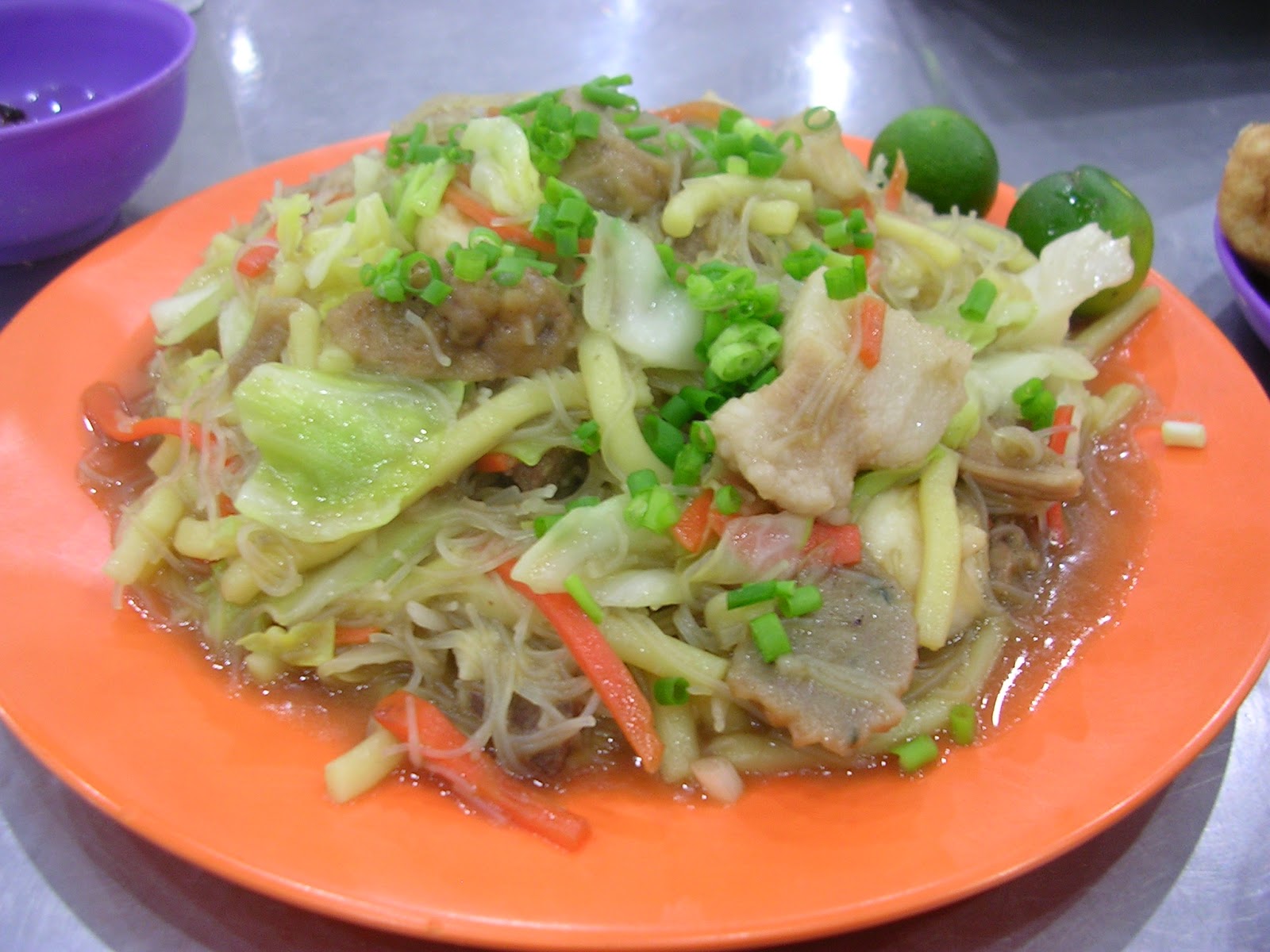
We had miki-bihon pancit guisado at Chopsticks and Spoons at the 5th level food court, with a humongous special siopao, which had asado filling half of the interior of the soft dough. and bola-bola with salted egg filling the other half. The pancit was full of sahog, and was cooked to order so we got it fresh and piping hot.
 The fruit selection is more interesting, with several pear varieties. No hami, but there were carts full of cherry-looking things that vendors said were cherry apples that were being sold for Php100/kilo. 
It turns out these were a kind of Asian crab apples, and the moniker is correct. They look like cherries, but they have the flesh of apples. Tart apples, that is, like green ones. Very firm flesh, crunchy and juicy, with the same uneatable core. 


Related Post

Monday, June 10, 2013

Back to School

School has just opened for my kids today, and I am still suffering from birthing pains. I get nightmares even during midday naps so I have no choice but to acknowledge that I am in a panic. 

The kids were more excited than usual, though. It usually takes an ambulance siren inside the house to wake them up at 6AM, and I have to nag every second for them to start moving, but this morning the alarm went off at 5AM, and they were off to take a bath - without hot water, miraculously - while I vainly tried to go back to sleep. Even the youngest was ready to go 30 minutes before the transport service arrived.

I still have 20 pieces of long folders to cover tonight - because the pre-covered ones cost ten pesos more than the do-it-yourself - and I still have to check that all the school stuff and boxed toiletries  that have to be brought to school tomorrow for the three of them are complete according to the list the school gave out. My elder daughter has no uniform to wear as she has outgrown every piece she has and I couldn't find someone who could finish all three sets in time for today. And oh yes, I have to adjust the hook in my younger daughter's skirt, as well, as she has grown a bit, too. 

In short, I am so abashedly unprepared, so caught up was I in enjoying the freedom of not having to rush home every evening to supervise homework and reviews, that I forgot days zip by with the speed of light.  We haven't yet gone to all the museums the kids wanted to visit. And we haven't taken that 10-hour train ride to Bicol. 

And now we're here, and in the excitement of the moment I neglected to check my cellphone this morning and so I failed to see the announcement that preschoolers need not go to school today. The kid had been picked up, and I was already on my way to the office when I knew, so I just called home to say that she should be home anytime. 

After two hours she has not come home yet, and I felt like I was having an asthma attack when I couldn't get in touch with anybody at home and in school. It just so happened that I just changed my cellphone and I kept getting a wrong number when I had been dialing the correct ones. When I had figured out what I was doing wrong it turned out that a  few mothers didn't get the announcement in time either, and so the kids were allowed to socialize and play in the classroom for a couple of hours before being sent home. 

So all ends well, and I hope everything goes right tomorrow. By the rate this day went by I am going to need the Independence Day holiday on Wednesday to recuperate and locate my bearings. I am bringing home these cute pastries from Bread Talk - Mr. Beans, filled with sweetened mashed red beans, and JJ Baby, filled to the ears with chocolate - for the kids' baon, but more to bring me a little comfort and some spirit of positive thinking. I hope I can smile like they do, soon.


Related Posts 

Thursday, May 23, 2013

Black Summer

"goma" sundae

The proliferation of Korean and Japanese restaurants and food outlets in metropolitan cities is affording us a glimpse into the food culture of our Asian neighbors. One that I couldn't fail to notice - much because it is not common in the Philippines - is the use of black sesame. 

I only know of one Filipino dish that uses linga, and that is palitaw, boiled sticky discs of ground glutinous rice flour eaten sprinkled with grated coconut meat, sugar and white or toasted sesame seeds.  But the use of linga is not an absolute - not all the palitaw I've eaten around the country boasts of sesame seed topping. 

In Pangasinan, for example, we don't use it, but there is a variant made by my in-laws that submerges the dough discs in a viscous sauce aromatic with toasted linga and does away with the dry toppings, called masikoy. But the sesame seeds used are white, toasted in a hot pan to bring out the nuttiness and for color. For a while I thought all sesame seeds were white, and the brown and black ones were only according to toasting preferences.

I'm curious, though, because the children's folk song Bahay Kubo speaks of sesame plants flourishing all around a countryside backyard, and yet indigenous Filipino cuisine doesn't seem to have much use for it. Of course now sesame is in much use, the seeds as topping for burger buns, and as coating for buchi. I liberally use sesame seed oil as flavoring for noodles and vegetables. And in Asian restaurants we have battered fried meats and stews sprinkled with sesame seeds. But all these are rooted in cuisines outside our country.   

black sesame milk tea

This summer was explosive with black sesame seeds. The nuttiness was ground and made into a tar-like  paste to top the goma sundae at Pepper Lunch, while a sprinkling of white sesame seeds ensured that the flavor is unescapable. It is heavenly, akin to eating cold, melting palitaw that does not sink as a rock in the gut. 

I don't like Serenitea milk teas that much, but the selection is so varied that I go there intermittently to taste-test. The  black sesame milk tea caught my eye, and tongue. With a choice of roasted tea or assam as the base tea, it can be had hot or cold. I prefer the cold version, of course, in this heat. The black sesame is not even a flavored syrup, but real seeds that have been ground to a coarse powder so the drink comes out gritty. It is similar to the goma sundae, in melted form, and drinking it is like drinking a liquid palitaw.
Outlets of the Korean bakery Tous Le Jours sprouted like mushrooms all over the metropolis, enlightening Pinoys to French goodies with a Korean/Asian touch. It is like a trendier, and more expensive, version of pioneer Bread Talk, without the floss. 
Several pastries sport black sesame seeds atop, like a crown of sparse cropped hair, but remarkable is one of their bestsellers, sweet black rice bread with black sesame cream cheese. An immaculate bun gets an ebony spray, and cradles inside a generous filling of cream cheese pocked with the seeds that shatter with crunch and nuttiness with every bite. 
It's like palitaw and siopao and cheesecake all in one. 
At katsu Japanese specialty restaurant Yabu the condiment tray adorning every table invites diners to season  and spice the otherwise insipid battered fried meats and seafood. But served with the entrees is a small bowl with notched interiors for grinding the spoonful of keyboard-hued sesame seeds. Grind to preference, then ladle in the gooey, dark-brown dipping sauce that's reminiscent of worcestershire and teriyaki. 

The sesame salad dressing with black sesame seeds peeking out is slurpable, and is excellent both with the katsu and the unlimited shredded cabbage. I've found a similar salad dressing at the supermarket under the Kewpie brand, and it is just as good, and maybe even better, since I can have it at home to douse on whatever I fancy. 
Among all the sweets mentioned in this post, the Mochi Sweets' black sesame mochi is the closest in taste and texture to palitaw. For of course both are made with ground rice dough so they have the sticky, chewy feel. But least of all is the black sesame taste tasted here, for it seems the filling is extended with black beans or dyed sweet potato. Which is unfair, considering the price of this small treat.

Related Posts


Bahay Kubo

Bahay kubo, kahit munti
Ang halaman doon ay sari-sari
Singkamas at talong, sigarillas at mani
Sitaw, bataw, patani

Kundol, patola, upo’t kalabasa
At saka meron pa, labanos, mustasa
Sibuyas, kamatis, bawang at luya
Sa paligid-ligid ay puno ng linga


Roughly translated as:

Bahay Kubo
(Filipino folk song)

Nipa hut, even though small
the plants surrounding it are varied and many
turnips and eggplants, winged beans and peanuts
yard-long beans, hyacinth beans, lima beans

wax gourd, sponge gourd, bottle gourd, squash
and there’s more, radish, mustard
onions, tomatoes, garlic and ginger
the surrounding spaces filled with sesame


Monday, April 01, 2013

Bisita Iglesia - Coastal Cavite: Bacoor


St. Michael the Archangel Church
Gen. Evangelista Street, Bacoor, Cavite

The church in Bacoor has a narrow nave, with very thick outer walls made from large stone blocks, making it dark inside even during the daytime. Being inside the church is like being transported in time - the dark, the cold air in spite of the hot summer outside, and the echoes bouncing on the stone walls let me imagine how it is to live in a medieval castle.

The church isn't medieval, though it's old relatively by Philippine church standards, having been built in 1752. Fr. Mariano Gomes, one of the three priests (the Gom in GomBurZa) executed on charges of leading the failed Cavite mutiny in 1872 that fueled national fervor in Filipino revolutionaries, was parish priest of the Bacoor parish for forty years until his arrest by Spanish authorities.  

Historical Significance
Bacoor was the first seat of the Philippine Revolutionary Government after the declaration of independence in 1898. A stone's throw away from the St. Michael church, a hundred meters or so back along Gen. Evangelista St., is the house that served as the government's headquarters. It can be recognized with the  Philippine flag that flies on its front and an identification marker at the ground level, but it's not publicly accessible as it is still used as a residential abode.

Pit Stops
- Just by the side of the church, at the war veterans' memorial, is a cart full of pans of still warm cassava pudding that's not to be missed. Sample slices are sold for Php13 each, while a full pan costs Php100. The cassava is unctuously malagkit, as with the creamy, caramelly topping. I rooted for the burnt topping at the edges.
- Within walking distance from the church is the Digman sitio, where several establishments serve up Digman halo-halo with a dozen ingredients. Walk down the street (J. Ocampo) fronting the cassava pudding kiosk, passing about three corner alleys. Turn left at the dead-end. The halo-haluans are clustered in the near corner.
- Farther along Gen. Evangelista Street, just before it turns left onto Mabolo is a pasalubong center of OTOP products. Very Kabitenyo are the tahong and luyang dilaw chips, but there are other flavors - carrot, malunggay, ampalaya, saluyot. Crispy tahong in pouches and bottled adobong tahong and various pickled vegetables complete the line-up.


Directions


From Manila
By Private Vehicle
- Bacoor is approximately 17 kms. southwest of Manila, traversing Coastal Road (Pasay City & Las Pinas) and a very short span of the Aguinaldo Highway. Towards the end of Coastal Road in Las Pinas take the fly-over going into Aguinaldo Highway by taking the right turn. After the Shell gas station the Aguinaldo highway turns right then curves to the left. Take the first right corner (Talaba) and drive straight onto Gen. Evangelista Street. You will pass by the Bacoor public cemetery and the Eternity memorial park, and a Ministop convenience store. The church is on the right side, just beside the war veterans' memorial, and in front of the city hall across the street.
By Public Transportation
- Board an air-conditioned bus passing by Aguinaldo Highway (signboards Tagaytay, Mendez, Imus, Dasmarinas, Nasugbu), which get passengers along EDSA from Cubao/Ortigas, and along Taft Avenue, Quirino and Roxas Boulevard from Plaza Lawton. Get off at Talaba, Bacoor a few hundred meters from the flyover at the end of Coastal Road passing by Shell gas station. Board a jeep waiting just at the  mouth of Gen. Evangelista Street, with the signboard Binakayan. Ask to be let off at the Bacoor church.  


The Other Churches in the Coastal Cavite Bisita Iglesia

Bisita Iglesia - Coastal Cavite: Kawit


St. Mary Magdalene Parish Church
Km. Post 23, Tirona Highway, Wakas, Kawit, Cavite

One of the oldest churches in the Philippines, the original church in Kawit is still almost intact. Built in 1638, its facade and thick walls are made of red brick. Thick stone buttresses projecting from the outer walls on both sides of the church reinforced it so it was untouched by the earthquakes that ravaged other old ones in the country. 


Among all the churches in coastal Cavite, only the St. Magdalene church is adorned with stations of the cross rendered in stained glass, that serve as the center point of the glass windows all around the outer walls. 
The church is open only during mass (6AM, 4:30PM, 6PM daily) owing to past thefts. 
Historical Significance
The Kawit church was where the first Philippine president Emilio Aguinaldo was baptized. His birth certificate is on display in the museum at the back of the church.

A stone's throw away, back a few hundred meters, is the Aguinaldo shrine, where the Philippine flag was first raised upon the declaration of Philippine independence from Spanish rule, on June 12, 1898. It is just the original place, though, since the building, which was the ancestral house of the family of former president Aguinaldo, has since been enlarged, and presently sports pink painting including its perimeter walls. Inside, turn of the century spacious dining and receiving areas have thankfully been preserved, including the thick narra furniture.  

Pit Stops
- Just before the turn to the Aguinaldo shrine is Neng's Bibingka, serving thick, galapong bibingka that's as big as platters.
- A few meters from the church, across the road, is a milk tea counter inside an internet gaming station. The drinks at Milk 'n Tea Way are unimpressive, but the rock salt & cheese iced dark chocolate is remarkable, and I'd like to go back for the caramel variant.
- The Tirona Highway, on which the Kawit church is located, turns left then right and becomes the Magdiwang Highway on the way to the adjoining town of Noveleta. Here is where the original Josephine's restaurant is located, amidst fishponds. 
- Just before the Kawit fire station is the Japanese restaurant Sasahama, frequented by Japanese investors in the locators at the Cavite Export Processing Zone. 


Directions

From the last Bisita Iglesia church - Bacoor
About 6 kilometers south-southwest
By Private Vehicle
- Turn right from the church and go along the street, turning right at the rotonda in Mabolo - marked Freedom Park Bacoor - onto Tirona Highway. Go straight until the right turn at Gahak in Kawit, which circumscribes the Aguinaldo shrine. The church is right at km. post 23, after the right turn from the shrine.
By Public Transportation
- On the street in front of the Bacoor church, flag a jeep going to Binakayan. Get off at the Mabolo rotonda (Freedom Park Bacoor), and there board a baby bus going to Cavite City. Ask to  be let off at the Kawit church.   

From Manila
By Private Vehicle
- Kawit is 23 kms. out of Manila, traversing Coastal Road (Pasay City & Las Pinas), Cavitex (Manila Cavite Expressway), and the Tirona highway. At the junction just out of Cavitex turn right onto Tirona Highway, skirting the Aguinaldo House, then right to Wakas. The church is on the right side just at the km. post 23. 
By Public Transportation
- Air-conditioned buses with the signboard Cavite City get passengers starting from Plaza Lawton (Liwasang Bonifacio) in Manila, traversing Taft Avenue, turning  to Quirino Avenue, then left onto Roxas Boulevard and then on to the Coastal Road,  Cavitex, and the Tirona highway. The buses pass right by the Kawit church.  


The Other Churches in the Coastal Cavite Bisita Iglesia

Related Post
Fishing Village at Island Cove

Bisita Iglesia - Coastal Cavite: Noveleta


Holy Cross Parish Church
Noveleta, Cavite

The Catholic church in Noveleta is the newest among all the seven churches in this series, being only about 75 years old. It is relatively small, its size and cozy, homey, modernist feel more apt for a village chapel than the impersonal detachment of a parish church.


Historical Significance
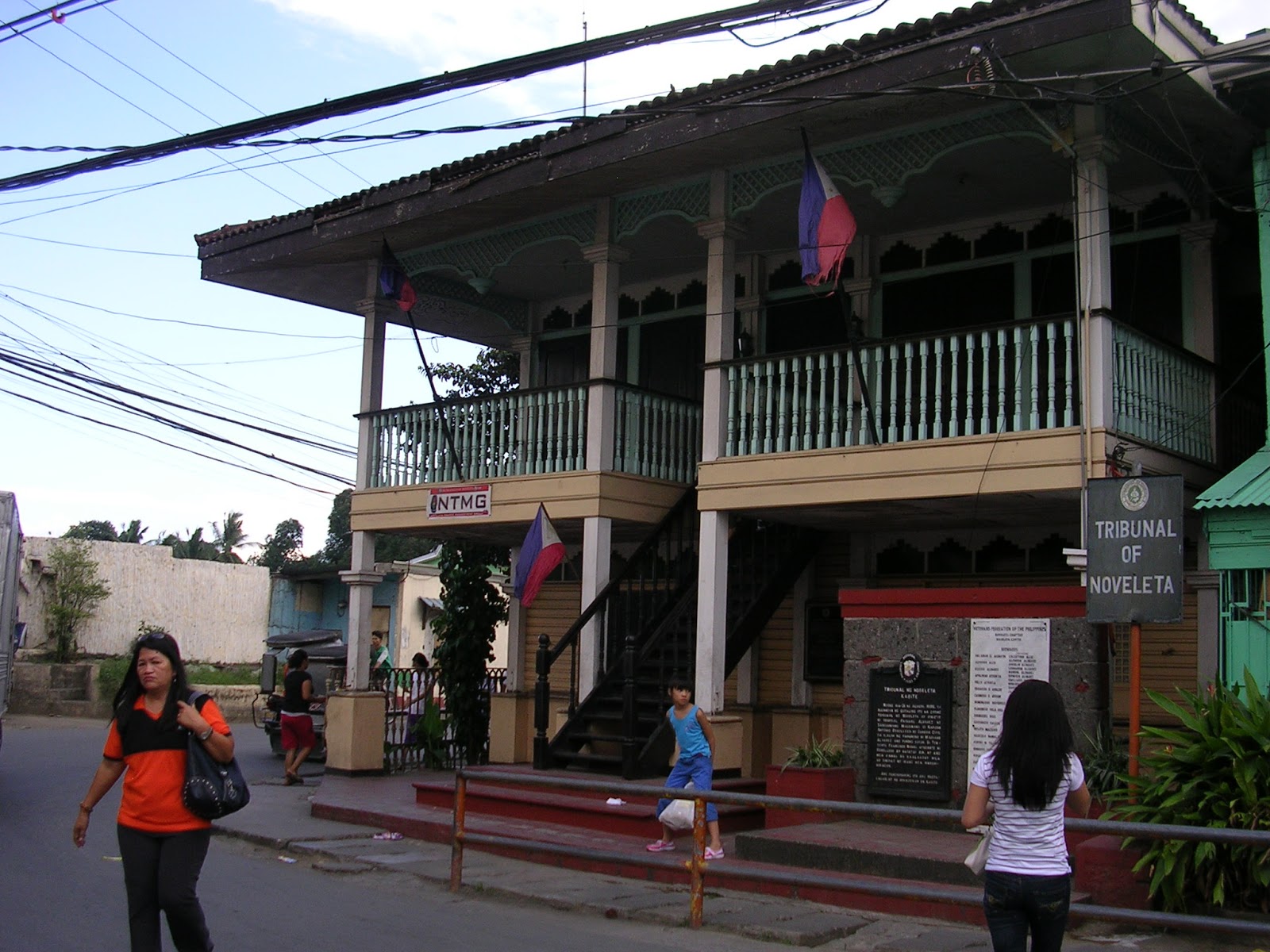
About ten meters back from the Noveleta church, in front of the public market, is the former Noveleta tribunal, preserved from the 19th century. It is historically significant for the entire province, for this was where Gen. Pascual Alvarez of the Sangguniang Magdiwang killed the captain and adjutant of the town's Guardia Civil. Their soldiers were taken as prisoners by the Magdiwang rebels. This event jump-started the indio rebellion in  Cavite,  responsible for making the province eternally shining on the Philippine flag as one of the sun's eight rays. 


Pit Stop
About 250 meters before the town proper, right at the foot of Noveleta Bridge and just before km.post 27 is a restaurant that was built to pay homage to historic Cavite and the Philippine Revolution. Various historical knick-knacks repose on its walls, and its signature dishes were named after the major personalities in the fight for freedom. A large patio hosting landscaped gardens is an inviting  place to take a breather before the next leg of the journey.

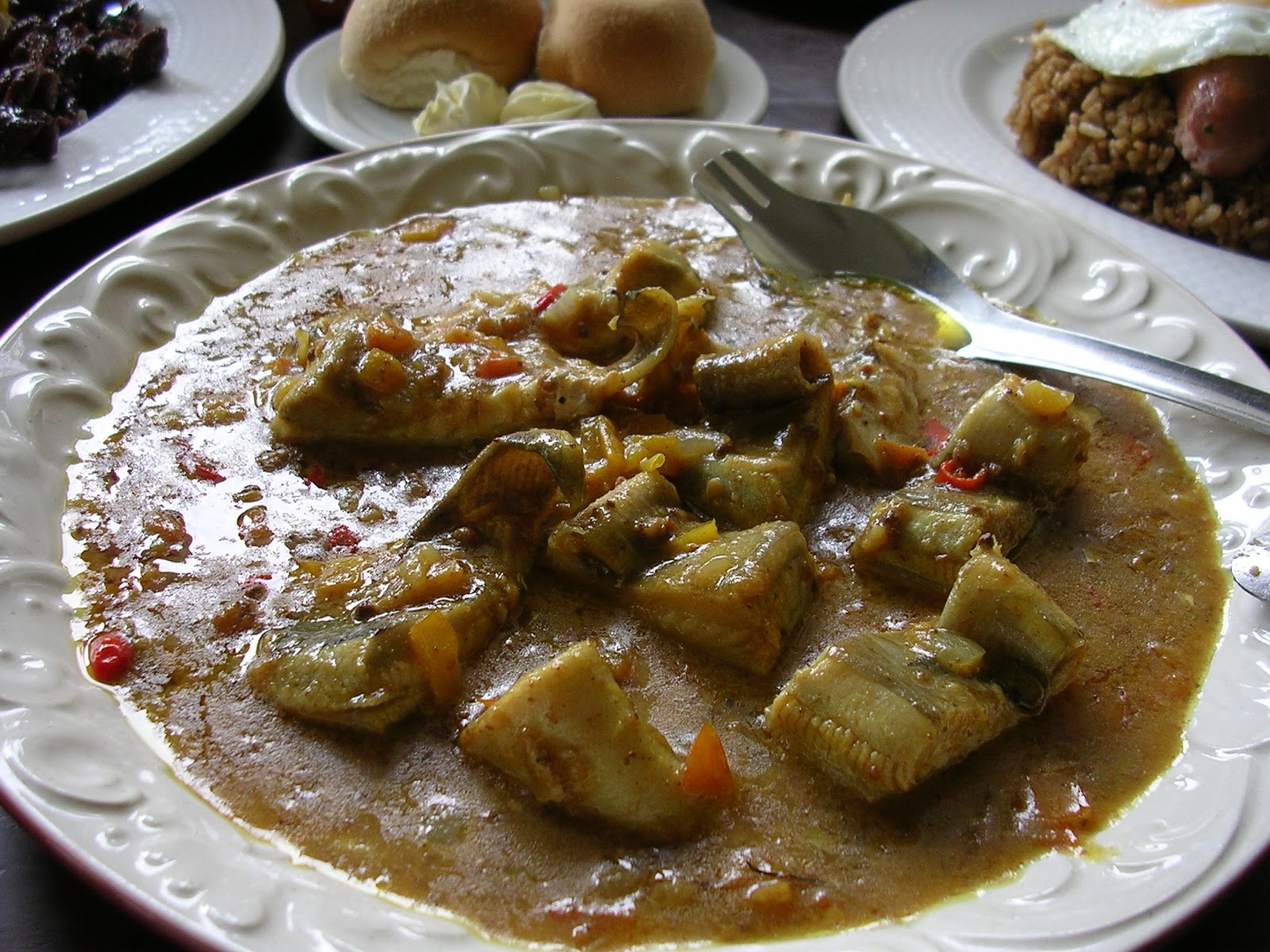
The menu, though, is mostly European, the local country only scantily represented. But the few Pinoy  dishes are all worth checking out, particularly the tuka turmeric, thinly sliced stingray in a thick stew dyed with luyang dilaw and liberally sprinkled with chopped red sili.


Directions

From the last Bisita Iglesia church - Kawit
About 4.2 kilometers south-southwest
By Private Vehicle
- Turn right from the church and go along the highway. After the Noveleta town hall turn left at the corner where GSIS Family Bank is, into the alley going to the public market and the two-storey former Noveleta tribunal, then turn right. The church will be a few meters on.  
By Public Transportation
- At the waiting shed in front of the Kawit church along the Tirona Highway flag a baby bus whatever its signboard is. Get off at the junction after the Noveleta town hall and cross the road into the alley at the right side of the town hall, at the corner of which is the GSIS Family Bank. Walk on, turning right after the tribunal museum. The church is at the right side.   

From Manila
By Private Vehicle
- Noveleta is about 27 kms. out of Manila, traversing Coastal Road (Pasay City & Las Pinas), Cavitex (Manila Cavite Expressway), and the Tirona and Magdiwang Highways. At the junction just out of Cavitex turn right onto Tirona Highway, skirting the Aguinaldo House, right then left then right again onto Magdiwang Highway and on to Noveleta. After the Noveleta town hall turn left at the corner where the GSIS Family Bank is, passing through the public market and the tribunal museum. Turn right and watch out for the church a few meters on, on the right side. 
By Public Transportation
- Air-conditioned buses with the signboard Cavite City get passengers starting from Plaza Lawton (Liwasang Bonifacio) in Manila, traversing Taft Avenue, turning  to Quirino Avenue, then left onto Roxas Boulevard and then on to the Coastal Road,  Cavitex, and the Tirona and Magdiwang Highways. Get off in front of Mercury drug store/Shell gas station, when the bus conductor shouts "Noveleta!" Walk a few meters on towards the Noveleta town hall on the left, passing by Jollibee then 7-11 to the right. Cross the road towards the right side of the town hall onto the alley where GSIS Family Bank sits in the corner. Turn right after the tribunal museum and walk on a few meters towards the church, which is on the right side. 


The Other Churches in the Coastal Cavite Bisita Iglesia

Bisita Iglesia - Coastal Cavite: Cavite City


San Roque Church
(Nuestra Senora Soledad de Porta Vaga Shrine) 
Burgos Avenue, Cavite City

The San Roque church is a work in progress. The outer walls' stained glass windows have just recently been unveiled. The church was established more than three hundred years ago and has undergone numerous renovations and refurbishings since then. Its facade and bell tower can be seen from many points along the way on the road to the city, from as far as Coastal Road.

The San Roque church hosts the more than four-hundred-year old painting of the Nuestra Senora Soledad de Porta Vaga,  known to be to the oldest Marian painting in the country today. It used to send off galleons going to Mexico during the Manila-Acapulco trade.

The devotion to the Marian image became encompassing that it was recognized not only as the patroness of Cavite City but also of the entire province of Cavite. Long lines of local residents paying their respect to the image form after masses, and buses of pilgrims crowd the avenue fronting the church on feast days and during Lent. 

Historical Significance - Cavite City
The city was founded more than four hundred years ago. It had been a significant ship port since the Spanish colonial times. Two galleons used for the Manila-Acapulco galleon trade were built at the Cavite City shipyard in the early 1600s. Two forts were also built, one of which now serves as a Philippine Navy base (Fort San Felipe). The city functioned as the provincial capital during the first half of the 20th century. The Americans established the Naval Station Sangley Point after World War II, which was heavily used as a take-off point during the Vietnam War. Sangley Base was turned over to the Philippines in the early 1970s, and is now operated by the Philippine Navy (Naval Base Heracleo Alano) and Philippine Air Force (Danilo Atienza Air Base).

Pit Stops
- Aling Ika's Carinderia, at the public market, for an incomparable bibingkoy.
- Dizon's Bakery, along Burgos Avenue near Jollibee for distinctly southern Tagalog tamales, pre-war cookies kenkoy, and the Cavite fresh cheese kasilyo.
- Asiong's Carinderia, on Paterno Street at the back of BPI on Burgos for pancit choko en su tinta, tamarind jam, buko-pandan salad and  seafood adobo cooked Cavite style.
- Samala, on Padre Pio Street, for bibingkang Cavite, sapin-sapin, and pichi-pichi.
- Asao, along Burgos Avenue near McDonald's, for pancit puso.
- Fresh tahong and oysters lining the road just outside the Naval Base Heracleo Alano in Sangley Point.


Directions

From the last Bisita Iglesia church - Noveleta
About 7 kilometers north-northeast
By Private Vehicle
- Go back to the junction and go straight onto the Manila-Cavite Road. At McDonald's Cavite City turn right onto Burgos Avenue. The San Roque church is about 1 1/2 kms. away. 
By Public Transportation
- Walk back to the junction and board a baby bus with the signboard Cavite City. Get off  in front of Mercury Drugstore, before the bus turns right to the Cavite City public market,and walk along Burgos Avenue. The church is about 200 meters on.   

From Manila
By Private Vehicle
- Cavite City is about 33 kms. out of Manila, traversing Coastal Road (Pasay City & Las Pinas), Cavitex (Manila Cavite Expressway), and the Tirona and Magdiwang Highways. At the junction just out of Cavitex turn right onto Tirona Highway, skirting the Aguinaldo House, right then left then right again onto Magdiwang Highway and on to Noveleta. After the Noveleta town hall turn right onto the Manila-Cavite Road. Stay on this road entering the Cavite City arch and passing the Julian Felipe marker to the left. At McDonald's turn right onto Burgos Avenue. The church is about 1 1/2 kms. on. 
By Public Transportation
- Air-conditioned buses with the signboard Cavite City get passengers starting from Plaza Lawton (Liwasang Bonifacio) in Manila, traversing Taft Avenue, turning  to Quirino Avenue, then left onto Roxas Boulevard and then on to the Coastal Road,  Cavitex, and the Tirona and Magdiwang Highways. Get off at McDonald's Cavite City and board a jeep going either to PN or San Antonio. Both passes by the San Roque church.


The Other Churches in the Coastal Cavite Bisita Iglesia

Bisita Iglesia - Coastal Cavite: Rosario


Our Lady of the Most Holy Rosary Church
Marseilla Street corner Gen. Trias Drive, Rosario, Cavite 

The town of Rosario was named after its patron saint, Nuestra Senora Virgen del Santissimo Rosario, Reina de Caracol. The parish church is the shrine of a miraculous image of the Madonna and Child, said to be an early 1800s painting by a famous Filipino artist, Faustino Quiotang. 

The image is enshrined at the main altar, with a replica lording over a small chapel adjacent to the right nave of the church for private devotions. A steel fishing net serves as a veil over the icon, held on both ends by two fishermen, in a nod to the main source of livelihood for the people in the municipality. Devotion to the icon came about when the crew of a sinking batel during an extraordinarily violent storm prayed to the image which was aboard at that time, and they were all spared, washed ashore in a sitio of the town. 

A makeshift chapel made of bamboo and wood was built in the sitio for the image, but legend says some boys who liked to swim at the beach found the image afloat again and again. So the townspeople transferred the icon inland, building a more permanent structure for the painting. 

When the devotion to the Madonna grew it wasn't long before the barrio, called Tejero, where the church was built was declared a parish. This was in 1845, and it prompted the Spanish regime to cede the barrio, decreeing it a new municipality a year later. 

Caracol is a big celebration in Rosario during the feast months of the Virgin Mary, May and October. There's a fluvial procession, caracol del mar, as well as street dancing, caracol del tierra. The street dancing is also observed in most coastal towns in Cavite, and it's an awesome sight to see middle-aged men and women dancing in the streets carrying a santo.  The dance steps are constant, and it looks like one step forward and two steps backward, that the entourage never seems to go along. But the acceptance of the devotion and its caracol is evident in the way commercial buses full of passengers and private vehicles would stop for as long as an hour during caracol time, as the caracol route is normally along major thoroughfares.
On the other side of the Rosario church is another adjacent chapel that houses the stations of the cross. What makes the Rosario church unique is that the stations of the cross culminate with the Risen Christ at the altar in the center of the chapel.
a colossal banyan tree at the church courtyard, in the midst of which is a statue of the Virgin Mary


*With a clean public CR by the multi-purpose hall.

Directions

From the last Bisita Iglesia church - Cavite City
About 10 kilometers south-southwest.
By Private Vehicle
- In Cavite City go back  along Burgos Avenue, passing by McDonalds to your left, and straight out of the city arch and onto the Manila-Cavite Road. Turn right at the junction in Noveleta onto Marseilla Street. Go straight along the road - the church is at the back of the town plaza to the left just before Gen. Trias Drive, about 3 kms. from the junction.
By Public Transportation
- Walk back to Mercury Drug in front of the pathway to the Cavite City public market, and board a baby bus with the signboard Tanza/Salinas. Ask to be let off at the Rosario town plaza, and cross the street to the back of the plaza where the Rosario church is.  

From Manila
By Private Vehicle
- Rosario is about 30 kms. out of Manila, traversing Coastal Road (Pasay City & Las Pinas), Cavitex (Manila Cavite Expressway), and Centennial Road (EPZA Diversion Road). At the end of the Centennial Road by the junction in General Trias turn right onto Gen. Trias Drive. Go straight, passing by SM Rosario, then turn right by the town plaza onto Marseilla Street. The immediate right corner by the perimeter of the town plaza is the alley leading to the Rosario church.
By Public Transportation
- Air-conditioned buses with signboards Naic/Ternate/Maragondon get passengers starting from Plaza Lawton (Liwasang Bonifacio) in Manila, traversing Taft Avenue, turning  to Quirino Avenue, then left onto Roxas Boulevard and then on to the Coastal Road,  Cavitex, and the Centennial Road. Get off at Gen. Trias at the junction of the highway, and board a baby bus with the signboard SM Rosario/Cavite City. Get off at the Rosario town plaza just a few minutes after SM Rosario. Walk to the back of the town plaza to the Rosario church.


The Other Churches in the Coastal Cavite Bisita Iglesia